ASCE NCS-SEI September 2025 Meeting
Analysis and Design of Support of Excavation (SOE) Systems
Click HERE for the registration link.
This ASCE session is designed to introduce participants to the dynamic and rapidly evolving field of underground construction, with a special focus on the analysis and design of Support of Excavation (SOE) systems. The session will provide an overview of commonly used SOE systems and the various methods employed in their analysis, offering valuable insights for both students and professionals interested in geotechnical and structural engineering applications in underground construction.
Supporting excavation (SOE) is a critical engineering discipline at the intersection of geotechnical and structural engineering. This presentation explores the principles, methods, and innovations in designing temporary structures that enable safe excavations while protecting adjacent infrastructure.
SOE systems are temporary engineered structures designed to stabilize deep excavations, typically exceeding 6 feet in depth. These systems allow for vertical or near-vertical cuts, significantly reducing the earthwork volume and minimizing the construction footprint. In urban and metropolitan areas, SOE systems are particularly critical as they protect adjacent buildings, utilities, and infrastructure from potential damage due to ground movement. They enable construction in confined spaces where traditional sloped excavations would be impractical or impossible.
Design Principles and Analysis Methods
| Methods of Analyzing SOE Systems | Common Types of SOE Systems |
|
|
An Example of Designing a SOE System (PLAXIS 2D):
The choice of SOE system is a function of engineering design, site constraints, environmental considerations, and economic factors. A proper geotechnical investigation and site assessment are essential to selecting and designing the most appropriate excavation support method to ensure safety, minimize risks, and optimize construction efficiency.
The design of Support of Excavation (SOE) systems requires a detailed understanding of soil-structure interaction, ground behavior, and construction staging. Numerical modeling tools, such as PLAXIS 2D, offer powerful capabilities for simulating complex geotechnical conditions and evaluating the performance of excavation support systems under realistic loading scenarios.
In the following example, we demonstrate the use of PLAXIS 2D to design and analyze an SOE system for a deep excavation in an urban environment. This example highlights the modeling workflow, key input parameters, boundary conditions, construction stages, and interpretation of results, including deformations, bending moments, and ground surface settlements.
If you don’t have access to a PLAXIS license, you can request a free temporary license from Bentley Systems. Please email
Meeting Format: In-person
Location: The Catholic University of America, Maloney Hall (620 Michigan Ave NE, Washington, DC), Room TBD
Time: Monday, September 8th at 6:00 PM-8:00 PM
Cost of Attendance: $0 Students, $10 Life Members, $20 Members, $25 Non-members
(Note: Metered parking is available around the building.)
All in person participating attendees will be provided a PDH at their request.
About the Speakers

Parsa Heydarpour Ph.D., P.E.,PMP
Tunnel Specialist- COWI North America
Parsa Heydarpour, Ph.D., P.E., PMP
Tunnel Specialist, COWI NA
Dr. Parsa Heydarpour is an accomplished structural engineer and educator with a robust background in civil engineering, specializing in structural and geotechnical analysis and design. As a Tunnel Specialist with COWI NA, Dr. Heydarpour leads complex underground engineering projects, including large-scale transit systems, urban resiliency initiatives, and critical infrastructure development. His expertise encompasses advanced structural modeling, geotechnical assessments, and the development of innovative solutions for challenging engineering problems.
Dr. Heydarpour is a licensed Professional Engineer in multiple states (DC, MD, and NC) and a certified Project Management Professional (PMP). He is an active member of the American Society of Civil Engineers (ASCE) and a Top Expert Engineer Member of the MIDAS Expert Network. His contributions to the engineering community include hosting expert workshops and publishing extensively in peer-reviewed journals on topics ranging from seismic analysis to geotechnical modeling.
ASCE NCS-SEI April 2024 Meeting
Exploring Career Paths in Underground Infrastructure:
A Focus on Risk Management in Tunneling Projects
Click HERE for the registration link.
This event is designed to introduce you to the dynamic and rapidly growing field of underground construction, with a particular emphasis on the complexities and challenges of risk management in tunneling projects. This is a valuable opportunity to deepen your understanding of underground infrastructure and explore the vast career possibilities within this specialized sector.
Underground structures are an integral component of modern infrastructure, playing a crucial role in urban development, transportation networks, and resilient cities. Tunnels, subways, underground utilities, and deep foundations support the functionality and efficiency of societies worldwide. However, these projects come with unique challenges, including geological uncertainties, environmental constraints, and safety concerns. Effective risk management is essential to ensuring the successful planning, design, and construction of these complex structures. This session will provide you with industry insights, real-world case studies, and expert guidance on navigating the technical and managerial aspects of tunneling projects.
By attending this session, you will gain valuable knowledge from industry professionals who have firsthand experience in managing underground infrastructure projects. The discussion will cover key topics such as geological risk assessment, construction methods, mitigation strategies, and cutting-edge technologies used in tunneling. Whether you are considering a career in geotechnical engineering, structural design, or construction management, understanding the risks and solutions associated with underground projects will give you a competitive advantage in the field.
Meeting Format: In-person
Location: The Catholic University of America, Maloney Hall (620 Michigan Ave NE, Washington, DC), Room 326
Time: Thursday, April 24th at 6:00 PM-7:00 PM
Cost of Attendance: No Fee, RSVP is required due to limited capacity
(Note: Metered parking is available around the building.)
About the Speakers

Elisa Comis Parsa Heydarpour Ph.D., P.E.,PMP
Managing Director – ARX-Pini Group USA Inc. Tunnel Specialist- COWI North America
Guest Speaker Host
Elisa Comis
Managing Director, ARX-Pini Group USA Inc.
Elisa Comis has 18 years of experience in mechanized tunneling, with an emphasis on utilizing tunnel boring machines (TBMs) in a variety of ground conditions. She has participated in key projects around the world starting with Contractor SELI as plant manager in 2007 and then with The Robbins Company as Field Service Commissioning Engineer first and then Project Engineer. She also led the design of the first Robbins Crossover TBM being used in North America in Akron, Ohio.
In November 2017, she joined McMillen Jacobs as a subject matter expert regarding TBMs, where she served as a Lead Associate. From 2020 to 2022 Elisa was deployed as Assistant Resident Engineer at the DC Water North-East Boundary Tunnel Project. In September 2022, Elisa joined the Pini Group as the new PINI USA Managing Director. She is also Past Chair of the UCA Women In Tunneling (WIT) Group, and currently Chair of the SME Inclusion and Diversity Committee.
Parsa Heydarpour, Ph.D., P.E., PMP
Tunnel Specialist, COWI NA
Dr. Parsa Heydarpour is an accomplished structural engineer and educator with a robust background in civil engineering, specializing in structural and geotechnical analysis and design. As a Tunnel Specialist with COWI NA, Dr. Heydarpour leads complex underground engineering projects, including large-scale transit systems, urban resiliency initiatives, and critical infrastructure development. His expertise encompasses advanced structural modeling, geotechnical assessments, and the development of innovative solutions for challenging engineering problems.
Dr. Heydarpour is a licensed Professional Engineer in multiple states (DC, MD, and NC) and a certified Project Management Professional (PMP). He is an active member of the American Society of Civil Engineers (ASCE) and a Top Expert Engineer Member of the MIDAS Expert Network. His contributions to the engineering community include hosting expert workshops and publishing extensively in peer-reviewed journals on topics ranging from seismic analysis to geotechnical modeling.
Corrosion Protection Plan for 100-Year Service Life
Click HERE for the registration link.
Owners are using the design-build vehicle to deliver signature and expensive bridges. In this process, owners specify performance-based design where the service life of various replaceable and non-replaceable members is defined in the RFP. The means and methods of achieving the specified service life is left to the design-build team. AASHTO manuals refer to the use of design for service life to ensure that structures are designed to achieve 100 years of service.
The Fib 34 model predicts the service life of RC elements (with a 90% confidence level) exposed to chlorides based on the chloride loading, concrete permeability data (chloride migration coefficient), rebar material, design cover, and several other factors. Based on the modeling results, engineers select a specific combination of rebar cover, concrete mix design, and rebar material to achieve a 100-year life. The life cycle cost of each option is compared to select the best option for each environment (deck, superstructure, substructure, etc.).
This presentation will review the several factors that must be effectively addressed during the design stage to achieve a 100-year service life. Material/corrosion experts retained along with the design team can significantly help avoid factors that cause premature deterioration in structures.
Meeting Format: Hybrid (In-person & Virtual)
Location: WSP USA Inc., 13530 Dulles Technology Drive, 1st Floor – DEP Conference 1, Herndon, Virginia 20171
Time: Thursday, June 20th at 12:00-1:00 PM
Virtual Link: The meeting link will be sent out following registration to all virtual attendees
Cost of Attendance: Virtual ($10), Life Member ($10), Member In-Person ($20), Non-Member In-Person ($25)
Attendees will receive (1.0) Professional Development Hour (PDH).
(Note: Free parking is available around the building, except with a few reserved spots marked at the back. Lunch will be provided for all in-person attendees.)
About the Speaker
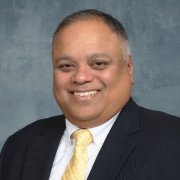
Siva Venugopalan, President
Siva Corrosion Services, Inc.
Siva Venugopalan graduated from Florida Atlantic University with a Master of Science in Ocean Engineering. He is a Cathodic Protection Specialist certified by the National Association of Corrosion Engineers (NACE). Before coming to the US, Siva graduated with a bachelor's in civil engineering from Coimbatore Institute of Technology, Coimbatore, and a Master's in Geotechnical Engineering from the Indian Institute of Technology, Madras. After a seven-year stint in two different firms in the US, Siva started his consulting firm in 1997. He is President and Principal Engineer of Siva Corrosion Services, Inc.
He is a member of the Tau-Beta-Pi Engineering honor society. He has published his work in several peer-reviewed journals. He is currently active in the bridge & infrastructure industry. As a member of the FHWA Expert Task Group, he has contributed to the Bridge Preservation Guide and developed several pocket guides for field engineers. He regularly participates in TRB and AASHTO meetings for Bridges and Structures. His passion is to design durable structures and extend the life of existing structures to achieve and exceed the design life.
All registered and paid attendees will be provided a PDH at their request. Meeting links are for individual registrants and may not be shared or used in a group viewing setting.
Understanding "Percent Composite" in Composite Beam Design
Click HERE for the registration link.
The design of composite beams for floor framing systems is one of the most common systems in the structural steel industry. This presentation will review some of the minimum requirements for composite beam design, including a discussion on what “percent composite” means and the AISC Specification language that discusses this aspect.
Meeting Format: Hybrid (In-person & Virtual)
Location: SK&A DC Office, 1155 Connecticut Ave NW, Suite 800, Washington, DC 20036
Time: Thursday, February 22nd at 12:00-1:00 PM
Virtual Link: The meeting link will be sent out following registration to all virtual attendees
Cost of Attendance: Virtual ($5), Life Member ($10), Member In-Person ($20), Non-Member In-Person ($25)
Attendees will receive (1.0) Professional Development Hour (PDH).
About the Speaker
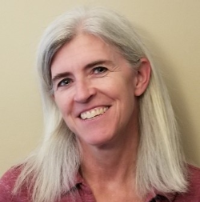
Susan B. Burmeister, P.E.
S2B Structural Consultants, PLLC
Susan Burmeister began her career in Atlanta, GA before coming to the Metropolitan Washington DC area in 2004. She graduated from the Georgia Institute of Technology with both a bachelor’s and master’s degree. She has extensive experience with concrete and steel structural design and began contributing to AISC Task Committee 5, Composite Design almost 20 years ago. She co-authored the recent AISC Design Guide 36 on Camber, and she has given presentations on composite design at several NASCC Conferences as well as AISC Night School and SEI University.
Call for Board Members
The ASCE National Capital Section is currently looking for individuals interested in the newly developed SEI Chapter of NCS. The Structural Engineering Institute (SEI) Chapter offers those with an interest in structural engineering the opportunity to network with other professionals, to sharpen their technical and professional skills and to grow professionally.
For additional information about the SEI Chapter of NCS, contact Gillian Love by clicking this link and expanding the Contact Form to submit your message.