"Dr. Z's Corner" Homework Assignments, Solutions and Applications
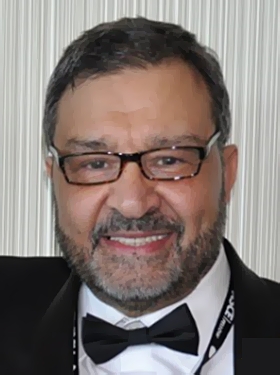
Ahmet Zeytinci, Ph.D., P.E., F-NSPE, F.ASCE, an award-winning licensed professional engineer, author, professor, and former chair of the Department of Engineering, Architecture, and Aerospace Technology at the University of the District of Columbia, in Washington, DC, has been named a Fellow by the ASCE Board of Directors.
Since joining academia, Zeytinci, or “Dr. Z” as he is known by his students and colleagues, has distinguished himself on campus and beyond as an extraordinarily dedicated and passionate teacher, mentor, scholar, and champion for professionalism and service in engineering. His areas of specialization are in structures, vibrations of plates, and computational applied mechanics.
He has produced award-winning designs; is prolific in professional service; and his pedagogical style allows free exchange with students and promotes deep learning. He is the recipient of numerous local, regional, and national awards, including the 2015 Excellence in Engineering Education from the National Society of Professional Engineers, the Distinguished Teaching and Outstanding Campus Representative from the American Society for Engineering Education’s Mid-Atlantic Section, the 2016 Dr. M.H. Parker Distinguished Educator’s Award from UDC, and the Centennial Engineer of the Month award from ASCE’s National Capital Section.
Zeytinci, who is also a Fellow of NSPE, has contributed to the professional societies in many ways. He has served as the co-chair of the ASCE National Capital Section Education Committee, past president (twice) of the District of Columbia Society of Professional Engineers, and the campus representative of ASEE. Since 1990 he has been the chapter/state coordinator of MATHCOUNTS, a national program that provides all sixth-, seventh-, and eighth-grade students the opportunity to compete in live, in-person contests against and alongside their peers.
He has been regularly writing technical articles for the ASCE National Capital Section’s monthly newsletter since 2014. His column is titled “Dr. Z’s Corner.” In addition, he has been offering pro bono Saturday classes for students and practicing engineers preparing for the FE/PE exams for the last 20 years.
After completing his master’s degree in Istanbul, Turkey, Zeytinci worked as a researcher in Japan for two years on earthquake resistant high rise buildings. Before joining UDC, he was a project engineer working in Europe, Japan, and the United States designing commercial and industrial structures, including the award-winning 7th District Police Station in Washington, DC.
He received his undergraduate and graduate degrees from Istanbul Technical University. He lives in Washington, DC, with his wife Gamze and his son Koray.
Dr. Z’s Corner (201409) - Conquering the FE & PE Exams
By Ahmet Zeytinci, P.E., F-NSPE

Editors Note: With this edition of the NCS eNewsletter, we begin a new monthly feature which will focus on insights and tips for mastering the Fundamentals of Engineering (FE) and Professional Engineering (PE) Examinations. The NCS is pleased to have Dr. Z share his expertise on this important topic.
It is indeed a pleasure to be writing this monthly column for students and practicing engineers in the metro area interested in pursuing the FE and PE Exams.
The FE Exam is the first step in the arduous process leading to obtaining a P.E. license in a variety of disciplines. Both exams are administered by the National Council of Examiners for Engineering and Surveying (NCEES), a national nonprofit organization.
The FE Exam is designed for recent graduates and students who are close to finishing their undergraduate degrees in environmental, industrial, mechanical, electrical, civil, or chemical engineering. Starting January 2014, the FE Exam became a Computer-Based Test (CBT) administered all year-round. For detailed information regarding the FE and PE Exams, readers should refer to the official website of the NCEES at http://ncees.org.
The new Civil FE-CBT consists of 110 multiple-choice questions. Examinees will have 6 hours to complete the examination which includes a tutorial, a break, and a brief survey at its conclusion. The FE Exam uses both the International System of Units and the US Customary System. The Civil FE Exam covers many of the topics covered during an undergraduate curriculum in civil engineering, including mathematics; probability and statistics; computational tools; ethics and professional practice; engineering economics; statics and dynamics; mechanics of materials; fluid mechanics; hydraulics and hydrologic systems; structural analysis and design; geotechnical engineering; transportation engineering; environmental engineering; and construction and surveying. Those interested in the exam topics within their individual specialty fields, other than civil, can ascertain this information at the NCEES website address listed above.
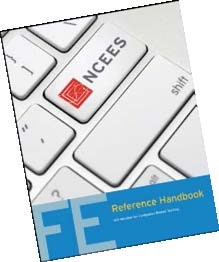
Finally, the readers of this column will always find a hyperlink at the end. This link will take readers to a PDF document containing sample problems, solutions, short cuts, and time-tested strategies. The variables, nomenclature, and terminology will generally be similar to that used in the NCEES FE Reference Handbook (9th edition).
For this month’s sample problems and solutions, click HERE.
Dr. Z’s Corner (201410) - Conquering the FE & PE Exams
By Ahmet Zeytinci, P.E., F-NSPE
I would like to start with thanking the readers of Dr. Z’s Corner from the metro area, around the nation and the globe for their good wishes, kind words, and constructive comments. As we’ve indicated earlier, the whole purpose of this exercise is to spark interest in engineering and along the way help the readers to prepare for the FE and PE exams and hopefully enjoy the experience. This month, I would like to answer some important questions that we’ve received from our readers.
Click HERE for this month’s sample problems and solutions.
How do I become a registered Professional Engineer?
Let us start with education. The students may start this journey in their senior year and take the (FE/EIT) exam even before they graduate. The exact rules may vary from state to state. Taking the (FE/EIT) exam is the most important step in the process followed by gaining the professional experience (number of years varies from state to state) and of course, passing the (PE) exam. For detailed information regard-ing the FE and PE exams the readers should refer to the official website of the National Council of Examiners for Engineering and Surveying (NCEES) at http://ncees.org.
Who prepares the questions for the FE and PE exams?
The Committee on Examination for Professional Engineers of NCEES prepares the questions. The committee is composed of P.E.s who are experts from industry, consulting firms, education, and volunteers. Periodic surveys are conducted by NCEES to ensure the FE exam specifications and contents reflect what is being taught in schools. The new format of the FE exam started in January 2014 following a survey done in 2012–2013.
What is the new exam format and reference materials?
The new FE exam is a computer-based test (CBT). It is closed book exam with an electronic reference handbook (FE Reference Handbook, New 9.1 Version for Computer-Based Testing) is the only resource material allowed during the exam. Examinees will have 6 hours to complete the exam, which contains 110 multiple-choice questions. The exam will be divided into two sections with a tutorial, a 25-minute break in the middle.
What are the dates of FE Exams?
Starting with the new computer-based test (CBT), the FE exam will be administered during four testing periods throughout the year: January-February, April-May, July-August, and October-November.
When is the registration period?
Registration will be open year-round. You may register and schedule the appointment through your “My NCEES” account on the NCEES website. The registration process starts when you select your exam location. Once the location is entered, the applicant will be presented with a list of exam dates for that particular location. To find the best time, you can always browse through the available dates at another testing centers approved by NCEES.
What kind of units is used in the test?
The FE exam uses both the metric system of units (SI) and the U.S. Customary system (USCS). In the USCS system of units, both force and mass are called pounds. Therefore, one must distinguish the pound-force (lbf) from the pound-mass (lbm).
What is the best strategy to conquer the exam?
The FE exam is computer-based and the FE Reference Handbook is the only resource material you may use during the exam. You won’t be allowed to bring your personal copy of the Handbook into the exam room. The computer-based exam will include a PDF version of the Reference Handbook for your use. Reviewing the Reference Handbook before the exam is one of the best strategies to conquer the test. Throughout your preparation, you must become familiar with the charts, formulas, tables, and all other reference information provided. For example, if you need the section properties of W 12 x 50, you may immediately flip to Page 155 of the Handbook in a couple of seconds or waste several crucial minutes searching for that information. In the FE exam, timing is everything and that is why you must have a time plan and a wristwatch.
Until next time,
Dr. Z
Dr. Z’s Corner (201411) - Conquering the FE & PE Exams - "PAT" Stands for Parallel-Axis Theorem
By Ahmet Zeytinci, P.E., F-NSPE
I was an avid reader of science fiction, and back in early eighties I read “X” Stands for Unknown, by Isaac Asimov, a collection of seventeen nonfiction science essays published in a science fiction magazine. The subtitle of this month’s article was inspired by that book and following some of our readers’ requests, I’ve decided to write about the Centroids, Moments of Inertia, and “Parallel Axis Theorem for an Area” which is one of the most important theorems in mechanics.
In the FE and PE exams there will be several questions about finding the centroids and moments of inertia of simple or composite areas. Both topics are listed as the “suggested required topics” at the top of page 266 of the new NCEES-Reference Manual (CBT-Version 9.1). Without getting into complex mathematics or derivations, let’s start with the “centroid of a cross-sectional area.”
In simplest terms, the centroid is a point that defines the geometrical center of an object or area and has to be determined first when solving problems in bending of beams, columns, and finding the deflections of flexural members, to name a few. The centroid of an area can be defined by considering the first moment of area about an axis, Integral (x.dA) and here x is known as the moment arm. On the other hand, the second moment of inertia, which is Integral (x2).dx is referred to as the moment of inertia for an area. Many problems in the FE and PE exams will require you to find the moments of inertia of any given area about any given axis, mostly horizontal centroidal axis.
In the NCEES-Reference Handbook, “Centroids” and “Moment of Inertia” are introduced on page 36, and on page 64, Moment of Inertia and “PAT” is defined. “The moment of inertia of an area about any axis is defined as the moment of inertia of the area about a parallel centroidal axis plus an additional term equal to the area multiplied by the square of the perpendicular distance d from the centroidal axis to the axis in question.” Two PAT formulas are in the handbook after the definition.
Visit the problems/examples for examples and supplemental problems to help demystify these concepts. Also, I strongly remind readers to review the formulas on page 65 of the Reference Handbook before taking the exam. When you need a formula for an area, centroid, moment of inertia, radius of gyration and product of inertia for simple shapes, go directly to PAGE 65 of the Handbook without wasting time. Rectangles, triangles, circles, circular sectors are on pages 65-67.
As always, I shall close with a final thought: during the FE or PE exams, the more time you spend on a difficult question, the more time you risk second guessing yourself. Trust your intuition. You have worked hard, don’t doubt yourself! Come back to that question later when you might have a clearer mind.
Until next time,
Dr. Z.
Dr. Z’s Corner (201501) - Conquering the FE & PE Exams
By Ahmet Zeytinci, P.E., F-NSPE
When approaching the FE Exam for the first time, it’s natural to feel a bit overwhelmed. The best way to build your confidence is to prepare for the test and to know the ins and outs of the test. This month’s problems can be found HERE.
To answer many readers’ questions, let’s review the exam day experience and what you are expected to do that day. Once your registration is approved, you will receive an email notification that you have been authorized to take the exam and are eligible to schedule your exam appointment. NCEES computer-based tests are offered in testing windows throughout the year during January, February, April, May, July, August, October and November. Once you register and know your exam date, NCEES recommends the following:
- Plan to arrive at the testing center 30 minutes prior to your scheduled appointment.
- Upon arrival, a representative will provide you with a copy of NCEES-CBT exam rules for your review. After doing so, you will be asked to provide your digital signature to confirm that you have read the rules and agreed to abide by them. You will need to provide a current government issued form of ID (such as a driver’s license). Once the representative confirmed your identification and the exam that you are taking, you will be asked to provide palm vein scan and have your photo taken. Your signature, palm vein scan and photo will be stored with your exam result.
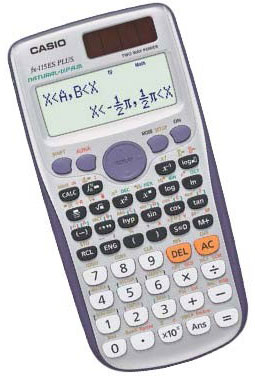
- Prior to be admitted into the testing room, a representative will insure that you have in your possession only the items that NCEES allows them to the testing room. These include: your ID, an NCEES approved calculator and eye glasses. Most test centers have secure storage lockers on site for you to store prohibited items such as cell phones, other electronic devices and personal belongings such as a watch, wallet and bag.
- Once you complete the check in process, report to an exam proctor who will confirm your ID through a palm vein scan. The proctor will then provide with you with a reusable booklet and marker for scratch work, review the exam rules, and will escort you to the exam room and assigned work station, and launch the exam.
- Before starting your exam, all examinees are required to read and agree to the NCEES’ non-disclosure agreement and complete a brief tutorial to learn how to ADVANCE to the next item, RETURN to a previous item and FLAG items for review.
- After completing approximately 55 questions, examinees will be prompted on screen with the option to take a 25 minute break. Examinees who wish to take the scheduled break should raise their hands and wait for the prompter tor assistance. Unscheduled breaks may be requested at any time during the exam by following the same procedure. However, examinees should be aware that clock will not stop during an unscheduled break. Examinees are allowed to access their lockers during the scheduled and unscheduled breaks.
- After completing the exam and a brief survey, you should raise your hands and proctor will verify that you had properly exited from exam and escort you from testing room and collect your booklet and marker.
You will not receive any type of score before leaving the testing center. You will receive an email from NCEES within 7 to 10 days notifying you that your results are available for viewing in your MYNCEES account. NCEES also provides information at www.ncees.org and YouTube.
Until next time,
Dr. Z.
- Dr. Z’s Corner (201502) - Conquering the FE & PE Exams
- Dr. Z’s Corner (201503) - Construction Module Afternoon Depth Exam Specifications
- Dr. Z’s Corner (201504) - A New Era for the PE Exams: Are You Ready for the New Specifications?
- Dr. Z’s Corner (201506) - A New Era for the PE Exams: Are You Ready for the New Specifications?