Alignment Sows Significance
- Written by Ranjit Sahai, PE, F.ASCE
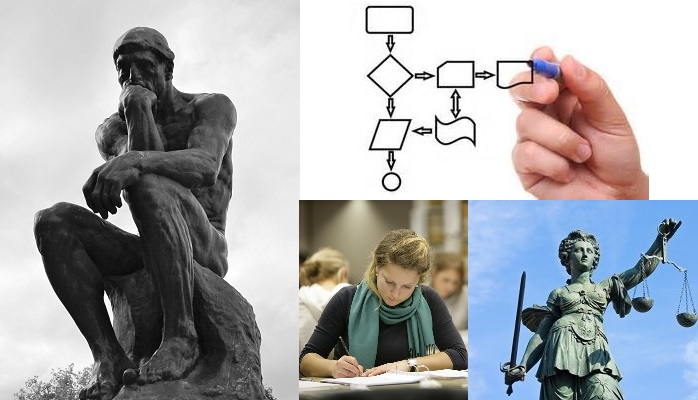
The larger your project in size, scope and complexity, the greater the number of teams involved in its planning, design, construction, and maintenance. Consequently, the diligence required of teams coming together for a successful outcome is much higher. That you must know how to apply scientific principles for civil works is a given. The larger the impact in size, scope and complexity you desire for your work, the greater the depth you must plumb in aspects other than scientific principles. In other words, it is the depth of understanding you develop about the “other aspects” of your profession, i.e. life itself that determines the complexity you can navigate with confidence for the successful outcome for your most ambitious projects.
The disciplines that comprise the expanded horizon can broadly be classified under the concept of humanities, i.e. the methods we use to function effectively by ourselves and in teams. This includes the disciplines of philosophy and ethics, effectiveness and leadership, and legal and social.
The Leadership Training Committee (LTC) of ASCE organizes and delivers content at its annual Regional Leadership Training Conferences for new and emerging leaders within the ranks of its volunteer-run Sections and Branches. The content delivered, as evidenced by looking through the list of sessions LTC runs, covers other aspects of the engineering profession but scientific, i.e. the dramatically expanded horizon.
An owner receives bids for the design of a project component and chooses the lowest bid to hire a professional. Soon after assembling the project, the component fails. Investigation reveals that the component was the cheapest on the market and not properly tested or documented by the vendor. It also reveals that the professional was not very well versed in the proper design of such components. What steps taken by who and when could have minimized the risk of failure resulting in the loss of resource investment by all involved? This is the expanded horizon your profession demands for significance.
When you purposefully align your professional interest with your rational long-term self-interest, i.e. human life, through relevant disciplines in humanities, you sow the seeds of significance that harness the best within you to do your best work. The legends we discover when searching bodies of knowledge from our profession inspire us to commit to do the best we’re capable of every day, one day at a time in a purposefully woven sequence of events that lead to the significance we seek.
Calumet "K" by Merwin-Webster
Written by Ranjit Sahai, PE, F.ASCE
The novel, Calumet "K" by Samuel Merwin and Henry Webster, was published in 1901. An abridged edition of the novel, by Ranjit Sahai, PE, was published in the newsletter of the National Capital Section of ASCE (May 2020, and Oct 2020 to June 2021 issues). The eight episodes of the abridged novel have been compiled into a single PDF available at this link.
Setting the Stage
Calumet “K” inspires me to leap over seemingly unsurmountable hurdles. The novel was published in 1901. It is the story of Charlie Bannon, a construction manager, who knows what it takes to get things done in time and proceeds to do so against all odds—be it a lack of transportation, corruption, insubordination, or other unforeseen events. Charlie is the epitome of an efficacious, thinking, problem solving mind—a portrayal so rare in modern fiction.
The project
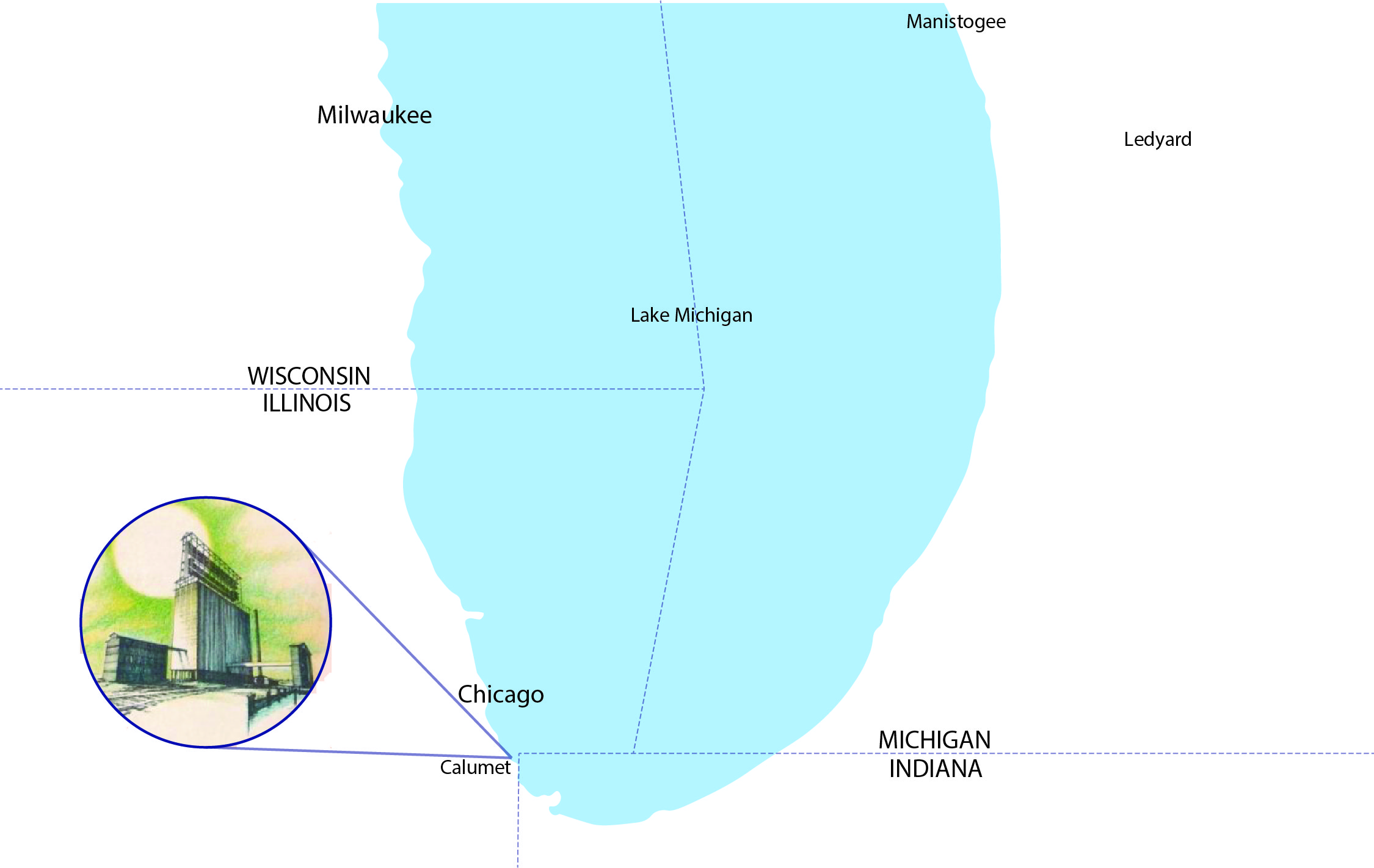
Calumet “K” is a grain elevator that must be built by the midnight of December 31, if the grain trading company that commissioned it is to avoid ruin. (The color illustration of the grain elevator above was cropped from an image on the cover of the novel republished in the 1960s.)
The location
Calumet is a small town in the southern suburbs of Chicago, Illinois. Ledyard, Michigan, a town North-East of Calumet and a major material supplier for the project, is a day ride away by railroad.
Historical backdrop
US Steel became the first billion-dollar corporation in 1901. Railroads are the dominant mode of surface transportation. Concrete reinforced with twisted steel reinforcing bars is gaining traction for the construction of major structures such as skyscrapers and bridges. US stock market crashes for the first time in 1901.
What’s to come
Starting with the October 2020 issue of the ASCE-NCS newsletter, the Calumet "K" Abridged Edition article series provides a front row seat, spanning several issues, to the story of the construction of Calumet “K,” and Charlie’s indomitable spirit.
About the author of the abridged edition
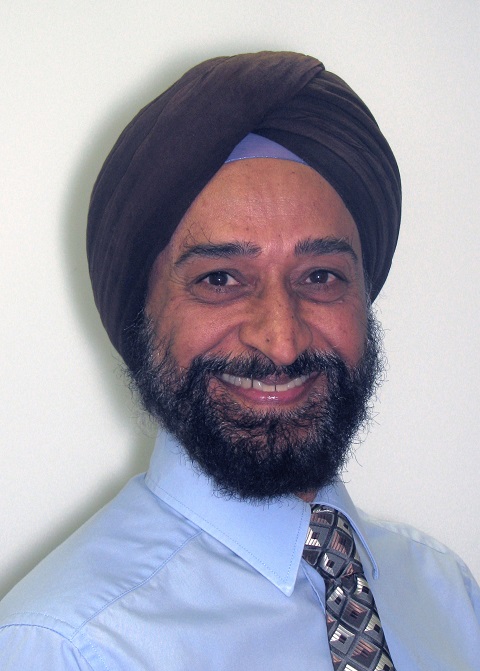
Ranjit, a Past President (2013–14) of ASCE-NCS, is a principal and founder of RAM Corporation, a firm serving State DOTs with a focus on traffic engineering design, stormwater facility inspections, and IT solutions for engineering workflows.
Digital Twins: Your Future Home
The second in a series of articles on digital twins in civil engineering, written by Ranjit Sahai, PE, F.ASCE.
A digital twin of your home is its digital representation that:
- Receives data from connected sensors
- Analyzes and responds to sensor data
- Provides tools to review/act on data
- Interacts with other models
Both the Ring doorbell and the Nest thermostat meet all but the last criteria. Digital models of the Ring and Nest devices receive data from sensors, analyze and respond to data received, and provide tools (app or screen) to review and act on that data. However, neither model interacts with other models. It is this lack of interaction with other models that disqualifies the Ring and Nest models as a digital twin platform. Both are connected to the home they model but are isolated from other models.
Your Future Home

new home, but also a QR code for its digital twin.
You are in the market for a new hom400"e and have selected the one to buy. Imagine when you go to the closing, you receive not just the keys for the home, but also a QR code for its digital twin.
On your way home, you scan the QR code in the Digital Twins app. The dashboard displays a list of models in your home’s digital twin: 3D visualization model, electrical and the plumbing distribution model, energy usage model, and basement wall model.
When you install a digital-twin-compatible video doorbell, its model updates the 3D visualization model with its location and 3D visual parameters, the electrical distribution model with the electrical circuit number it is connected to, and its energy consumption data in the energy usage model.
When you invest in a new HVAC system, the service technician requests permission to connect to the 3D visualization, the electrical distribution, and the energy usage models of your home’s digital twin.
This enables the technician to rapidly process all available equipment and identify the one most appropriate, while also developing a list of sensor-evidence-based work items for specialized duct or electrical work to include in the project’s scope of work.
Upon installation, the home’s digital twin also gets updated with information about the new equipment, and its operating and maintenance needs.
Then a few years after you invested in a sunroom addition, which was anchored to the basement wall in the backyard, you see a notification on the Digital Twins app alerting you of a message from the basement wall model.
The concrete in the basement wall had included an aggregate, derived from bones, for its piezoelectric properties. The concrete aggregate produces an electric charge in response to mechanical stress.
A piezoelectric transducer had triggered the notification from the basement wall model.
You click the notification, which invokes the 3D visualization model, which in turn highlights a six-foot-long and four-inch-wide vertical area starting from the lower-right corner of the basement window. A note next to the highlighted area of the finished basement states that a crack may be developing on the wall here.
After the contractor injects that area with a waterproofing sealant, he remarks that it would have been a few years before the gestating crack would have widened enough for groundwater to leak. The early warning from the digital twin had triggered an inexpensive fix, preempting the costly repairs associated with a flooded basement later.
Interaction Between Models
The “future home” Digital Twins scenario described herein consisted of several models. Each model was a purpose-specific representation of a product or its process. In this scenario, the video doorbell model interacted with at least three other models: visual model to update location and geometry; electrical model to identify circuit number; and energy model to feed it energy consumption data. In future articles in this series, we will discuss several other scenarios to showcase its potential in every imaginable disciplinary situation.
This series will conclude with a description of the technological framework underlying Digital Twins, and the skills needed to incorporate—even develop—such models for your infrastructure projects.
About the Author
Ranjit, a Past President (2013–14) of ASCE-NCS, is a principal and founder of RAM Corporation, a firm serving the needs of State DOTs, Courts, and SMBs for professional services and technology solutions.
Fostering Creativity in Engineering
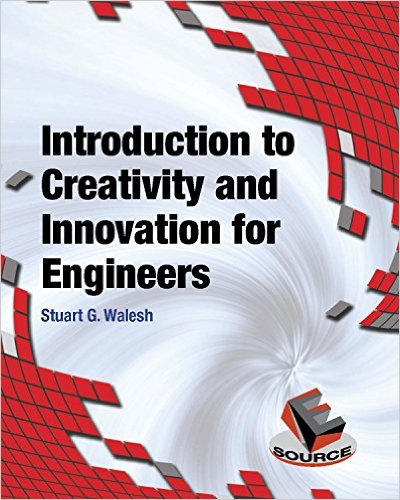
Having valued the clarity of presentation in Stuart "Stu" Walesh's webinars on engineering management at asce.org, I reached out to him in early January 2015 to enquire about his interest in creativity and innovation in the engineering industry, a topic he highlighted on his online profile. Turns out he was at work on his book, Introduction to Creativity and Innovation for Engineers for Pearson Education. Subsequently, I previewed and offered feedback on his manuscript in the first quarter of 2015 when the book was still under development. The book was officially released on January 13, 2016.
Stu's professional experience of over 40-years in engineering includes employment as professor and dean at a US engineering college and as contributor to ASCE's professional education programs. Stu was motivated to write this book after critically examining the Civil Engineering Body of Knowledge (CEBOK) published by ASCE and the curriculum commonly taught in US engineering schools.
He observed that engineering college curriculum and CEBOK lack exposure to methods that spark creativity. In the Preface he writes that deferring exposure to tools that spark creativity may cause two problems:
- Creative students drawn to engineering due to the fascinating solutions they see engineers build may lose interest in engineering when all they are exposed to during their early college years are analytical subjects.
- Students steeped in the study of only analytics may find it difficult to harness their creativity because the latter relies on the study of human cognition (How We Know), which is integration, and not analysis.
Why is it important to address these problems? He answers this question by quoting journalist Geoff Colvin, "In a world of forces that push toward the commoditization of everything, creating something new and different is the only way to survive."
On page 6 of Chapter 1 in Section 1.4.2 the author summarizes information from a variety of sources about the future direction of “knowledge work.” Think of "knowledge work" as the product of civil engineering knowledge, like analysis or computations, that can be automated or completed by cheaper labor abroad. The author contends that such “knowledge work” will not be the value civil engineers in developed nations deliver in the future. The value civil engineers deliver will be of a different type for the same type of project and that work will require the synthesis of work from many more specializations than before. This is consistent with what ASCE’s Vision 2025 document projects as well.
By raising the red-flag about the state of engineering education, Stu is standing up against a prevalent system that is broken. He deserves kudos for whipping up the motivation required to research creativity over several years to compile the fodder necessary to challenge ASCE’s Civil Engineering Body of Knowledge’s lack of focus in the area of creativity, an area that is necessary for civil engineers to play a role in solving the grand challenges of engineering (Engineering Challenges).
Subject and Theme
The book is a celebration of engineering accomplishments and of the human brain's capacity to conceive and build them. It is also an introduction to the basics of recent developments in neuroscience (scientific study of the nervous system) and to methods that harness the whole brain, both the left (logical) and right (creative). The underlying theme permeating the book is the idea that creative thought need not be an unpredictable bolt of inspiration; it is a learnable skill that must be cultivated deliberately by engineers to successfully tackle grand challenges now and in the future.
Audience
The book addresses engineering educators looking for ways to attract and keep intelligent kids to the profession. It also addresses those interested in learning and teaching concepts and methods of creative thought.
I do not think a non-motivated student can learn on his own from this book because he will not find the book interesting. A student must already be highly motivated by the subject itself to extract full value from the book. I equate motivated students to the audience (CEBOK editors, and educators/business owners embarking on a vital change they care about) in the above paragraph. The motivated student is sure to enjoy the fascinating engineering examples the author has carefully sprinkled throughout the book and also in the very well thought-out exercises he has hand-picked for the exercises. Might I say, a motivated student with an interest in sketching and drawing is likely to also be awed, as I was, by the gorgeous pencil sketches the author himself created and included in the book.
Assessment
If you already have, or wish to secure a role in updating ASCE's CEBOK, this book will prove invaluable in motivating you to consider the ways in which creativity can be fostered in engineering curriculum. If you’re charting a new direction for your civil engineering firm as a business owner; or if you’re looking to change the curriculum of the civil engineering class you teach in college as a professor, the ready access to sources in the extensive bibliography along with the introduction to concepts covered in this book will prove valuable.
If you’re a civil engineering student, you will need a great teacher to help you get through this material. This book can be used for self-study as it expertly compiles invaluable material as noted above; however, most students who lack significant engineering work experience are likely to find the sequence of presentation, and the depth of content, problematic because I think it will not help them get through the book on their own with a focused mind. I say this because a necessary ingredient in the proper education of the young mind (The Philosophy of Education) is contextual motivation. I did not find enough of this ingredient in the book and think more of the ingredient is necessary to help a young engineer kindle the spark of motivation in his own mind to stay focused. A great teacher with an interest in this subject will be required to provide that missing ingredient.
Knowledge Defies Age
Written by Ranjit Sahai, PE, F.ASCE
Colonel Sanders founded Kentucky Fried Chicken when he was 65. Grandma Moses, the celebrated painter, took up a paintbrush when she was 75. Harry Bernstein published his debut novel when he was 96. Alexander Fleming received the Nobel Prize at 64 for the discovery of penicillin, the first antibiotic. (Source: “Top Ten Late Bloomers of All Time,” Psychology Today, 2010). Clearly, the systematic study of a profession, i.e. education, can be the springboard for happiness regardless of age.
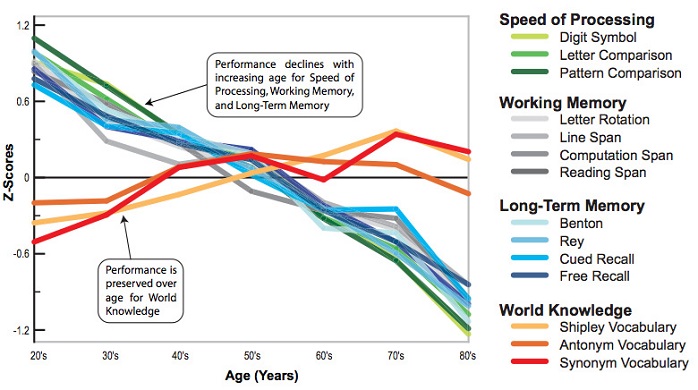
If professional significance is your goal, recognize that age is not a barrier but a goldmine of experience with the potency for unleashing the splendor you may seek. Volitional learning is the best, whether through books as self-study, or in a group setting to leverage an interactive environment. Regardless of the educational tools or environment you use, it is vital that you not move to a higher-level concept until the previous-level concept has been understood with just as much conviction as it had to be for the creator of that concept when she discovered, confirmed, and wrote about it.
Education is a method based on scientific principles. Maria Montessori’s system for teaching kids with a focus on expanding cognitive ability is ground breaking. Her work demonstrates an understanding of how human consciousness absorbs and processes information in a way every teacher at any level can grasp. The value of Maria’s work is best understood by grasping the concepts of human consciousness explained in the book Objectivism by Leonard Peikoff.
When you consciously set aside volitional time to expand your professional knowledge on your own dime, you feed your subconscious with world knowledge that powers the brain’s cognitive functions allowing you to grow professionally even when your bodily functions decline.