Knowledge Defies Age
Written by Ranjit Sahai, PE, F.ASCE
Colonel Sanders founded Kentucky Fried Chicken when he was 65. Grandma Moses, the celebrated painter, took up a paintbrush when she was 75. Harry Bernstein published his debut novel when he was 96. Alexander Fleming received the Nobel Prize at 64 for the discovery of penicillin, the first antibiotic. (Source: “Top Ten Late Bloomers of All Time,” Psychology Today, 2010). Clearly, the systematic study of a profession, i.e. education, can be the springboard for happiness regardless of age.
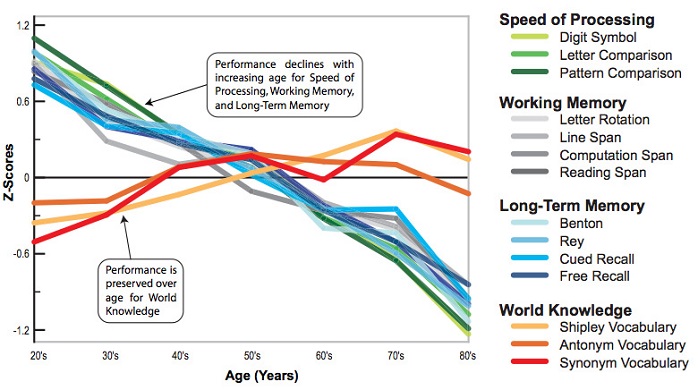
If professional significance is your goal, recognize that age is not a barrier but a goldmine of experience with the potency for unleashing the splendor you may seek. Volitional learning is the best, whether through books as self-study, or in a group setting to leverage an interactive environment. Regardless of the educational tools or environment you use, it is vital that you not move to a higher-level concept until the previous-level concept has been understood with just as much conviction as it had to be for the creator of that concept when she discovered, confirmed, and wrote about it.
Education is a method based on scientific principles. Maria Montessori’s system for teaching kids with a focus on expanding cognitive ability is ground breaking. Her work demonstrates an understanding of how human consciousness absorbs and processes information in a way every teacher at any level can grasp. The value of Maria’s work is best understood by grasping the concepts of human consciousness explained in the book Objectivism by Leonard Peikoff.
When you consciously set aside volitional time to expand your professional knowledge on your own dime, you feed your subconscious with world knowledge that powers the brain’s cognitive functions allowing you to grow professionally even when your bodily functions decline.
Your Medium Is Infrastructure
Your choice of profession determines the medium through which to leave a legacy. For the educator, her medium is the educational system or method. For the physician his medium is the human body. For the programmer her medium is the digital environment. For you, as a civil engineer your medium is infrastructure, i.e. civil works. Every profession produces a material thing, i.e. artifacts for that medium that can outlast the artifact's creator.
When you choose the profession you love, your subconscious focuses your senses to observe even the minutest details of relevant artifacts and its medium, whenever and wherever you contemplate them. This focus coupled with your capacity for logic increases your professional knowledge until you develop the confidence to express yourself through the tools used to create artifacts for that medium.
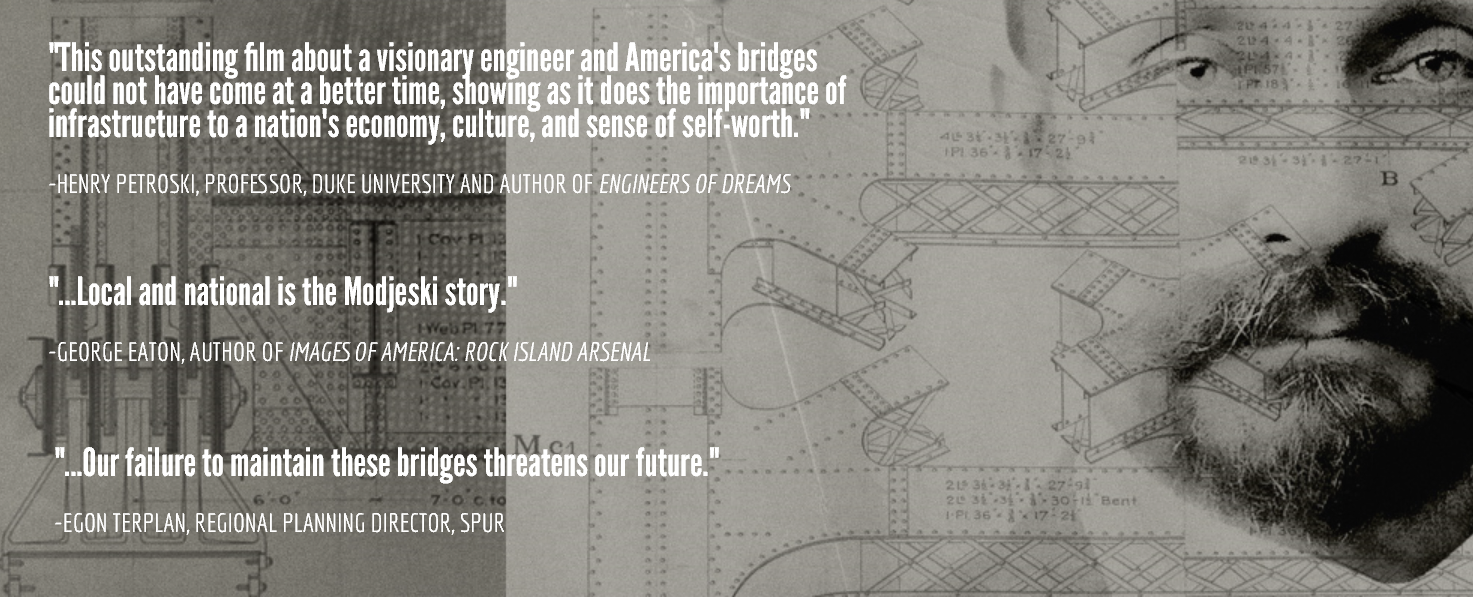
Ralph Modjeski was born in January 1861 and died in June 1940. He chose the bridge as his artifact and left a legacy as a pre-eminent bridge designer. The bridge design practice he started in 1893 lives on to this day as the firm Modjeski & Masters. The documentary film Bridging Urban America was released in the Spring of 2015. It highlights the vital role of bridges during the massive growth of America’s industry in the early 1900’s. By carrying people and goods across topographical barriers to distant and promising markets, bridges ushered humans to an era of prosperity like no era before the founding of America. The movie includes spectacular aerial shots of many bridges Ralph designed.
As a civil engineer your profession’s medium offers splendor in expression while making human life on earth safer, benevolent, cheerful. Ralph’s life inspires us to: focus our senses, harness our minds, and dream up for our medium solutions to challenges that seem unsurmountable.
ASCE-NCS acquired a DVD of this movie under a public showing license for educational purposes for PDH credit. If you wish to borrow it for showing at an event, contact the Webmaster for details.