Corrosion Protection Plan for 100-Year Service Life
Click HERE for the registration link.
Owners are using the design-build vehicle to deliver signature and expensive bridges. In this process, owners specify performance-based design where the service life of various replaceable and non-replaceable members is defined in the RFP. The means and methods of achieving the specified service life is left to the design-build team. AASHTO manuals refer to the use of design for service life to ensure that structures are designed to achieve 100 years of service.
The Fib 34 model predicts the service life of RC elements (with a 90% confidence level) exposed to chlorides based on the chloride loading, concrete permeability data (chloride migration coefficient), rebar material, design cover, and several other factors. Based on the modeling results, engineers select a specific combination of rebar cover, concrete mix design, and rebar material to achieve a 100-year life. The life cycle cost of each option is compared to select the best option for each environment (deck, superstructure, substructure, etc.).
This presentation will review the several factors that must be effectively addressed during the design stage to achieve a 100-year service life. Material/corrosion experts retained along with the design team can significantly help avoid factors that cause premature deterioration in structures.
Meeting Format: Hybrid (In-person & Virtual)
Location: WSP USA Inc., 13530 Dulles Technology Drive, 1st Floor – DEP Conference 1, Herndon, Virginia 20171
Time: Thursday, June 20th at 12:00-1:00 PM
Virtual Link: The meeting link will be sent out following registration to all virtual attendees
Cost of Attendance: Virtual ($10), Life Member ($10), Member In-Person ($20), Non-Member In-Person ($25)
Attendees will receive (1.0) Professional Development Hour (PDH).
(Note: Free parking is available around the building, except with a few reserved spots marked at the back. Lunch will be provided for all in-person attendees.)
About the Speaker
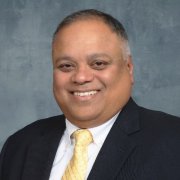
Siva Venugopalan, President
Siva Corrosion Services, Inc.
Siva Venugopalan graduated from Florida Atlantic University with a Master of Science in Ocean Engineering. He is a Cathodic Protection Specialist certified by the National Association of Corrosion Engineers (NACE). Before coming to the US, Siva graduated with a bachelor's in civil engineering from Coimbatore Institute of Technology, Coimbatore, and a Master's in Geotechnical Engineering from the Indian Institute of Technology, Madras. After a seven-year stint in two different firms in the US, Siva started his consulting firm in 1997. He is President and Principal Engineer of Siva Corrosion Services, Inc.
He is a member of the Tau-Beta-Pi Engineering honor society. He has published his work in several peer-reviewed journals. He is currently active in the bridge & infrastructure industry. As a member of the FHWA Expert Task Group, he has contributed to the Bridge Preservation Guide and developed several pocket guides for field engineers. He regularly participates in TRB and AASHTO meetings for Bridges and Structures. His passion is to design durable structures and extend the life of existing structures to achieve and exceed the design life.
All registered and paid attendees will be provided a PDH at their request. Meeting links are for individual registrants and may not be shared or used in a group viewing setting.
Understanding "Percent Composite" in Composite Beam Design
Click HERE for the registration link.
The design of composite beams for floor framing systems is one of the most common systems in the structural steel industry. This presentation will review some of the minimum requirements for composite beam design, including a discussion on what “percent composite” means and the AISC Specification language that discusses this aspect.
Meeting Format: Hybrid (In-person & Virtual)
Location: SK&A DC Office, 1155 Connecticut Ave NW, Suite 800, Washington, DC 20036
Time: Thursday, February 22nd at 12:00-1:00 PM
Virtual Link: The meeting link will be sent out following registration to all virtual attendees
Cost of Attendance: Virtual ($5), Life Member ($10), Member In-Person ($20), Non-Member In-Person ($25)
Attendees will receive (1.0) Professional Development Hour (PDH).
About the Speaker
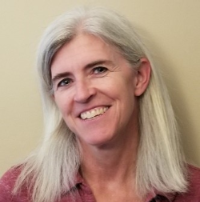
Susan B. Burmeister, P.E.
S2B Structural Consultants, PLLC
Susan Burmeister began her career in Atlanta, GA before coming to the Metropolitan Washington DC area in 2004. She graduated from the Georgia Institute of Technology with both a bachelor’s and master’s degree. She has extensive experience with concrete and steel structural design and began contributing to AISC Task Committee 5, Composite Design almost 20 years ago. She co-authored the recent AISC Design Guide 36 on Camber, and she has given presentations on composite design at several NASCC Conferences as well as AISC Night School and SEI University.
Call for Board Members
The ASCE National Capital Section is currently looking for individuals interested in the newly developed SEI Chapter of NCS. The Structural Engineering Institute (SEI) Chapter offers those with an interest in structural engineering the opportunity to network with other professionals, to sharpen their technical and professional skills and to grow professionally.
For additional information about the SEI Chapter of NCS, contact Gillian Love by clicking this link and expanding the Contact Form to submit your message.
March 26, 2025: Establishing a Shear Load Transfer Mechanism in Shallow Concrete Pier Caps via 3D FE Analysis and Crack Modeling
Establishing a Shear Load Transfer Mechanism in Shallow Concrete Pier Caps via 3D FE Analysis and Crack Modeling
Click HERE for the registration link.
Minnesota Department of Transportation (MnDOT) tasked WSP with inspecting and evaluating a series of pier caps on approach spans of two sister bridges that carry Trunk Highway (TH) 77 bridge over the Minnesota River. These pier caps were relatively shallow supported on two rectangular columns. The initial load rating analysis performed using traditional Strut-and-Tie Method (STM) resulted in poor ratings (given the geometrical restraints for STM analysis set forth by AASHTO LRFD (i.e., minimum angle between struts and ties). The sectional method gave better results, but it was still unsatisfactory in shear.
The WSP team developed a full 3D Finite Element modeling framework for these caps that leveraged solid elements to simulate concrete and discrete modeling of all internal reinforcement. Based on observed state of stresses in the as-designed model, cracks were then introduced into the model to approximate the state of non-linearity. Presence of these discontinuities in the concrete continuum allowed for development of a realistic stress field and shear transfer mechanism within concrete by effectively engaging internal reinforcement. The refined analysis indicated presence of a viable load path through evaluation of the 3D state of stresses, which resulted in satisfactory shear load ratings according to LRFR methodology.
Learning Objectives:
1) Recognize the limitations of traditional shear evaluation methods (STM and sectional approaches) for shallow concrete pier caps under AASHTO LRFD geometric constraints.
2) Understand how refined 3D finite element modeling—including discrete reinforcement and crack representation—can reveal realistic shear load paths in reinforced concrete bridge components.
3) Apply results from advanced 3D FE analyses to support bridge load rating decisions, demonstrating how viable load paths can lead to satisfactory shear ratings under LRFR when conventional methods are insufficient.
Date: Thursday, March 26th, 2025 - 12pm
Virtual
Speakers: Soroush Fakhri Yazdi, Vice President, Structures Manager, Washington DC; Amir Gheitasi, Vice President, Structures Manager, Baltimore, MD
Soroush Fakhri Yazdi is an achievement-oriented senior structural engineer with an exceptional educational background and extensive finite element analysis experience. Recognized for superior research, problem-solving, and design skills, Soroush has over 16 years of experience in project management, review, and design of highway structures in several states. Soroush’s teaching experience at GMU’s Civil Engineering Department underscores his expertise and dedication to the field. His ability to impart knowledge in complex subjects such as Structural Analysis, Soil Mechanics, Steel Design, and Reinforced Concrete Design was recognized by the department, leading to an assignment to join the faculty as an Adjunct Professor.
Amir Gheitasi has diverse experience involving analysis, design, evaluation, and rehabilitation of bridges and highway structures, including long-span steel plate girders, curved steel plate girders, steel box girders, prestressed concrete girders, precast and cast-in-place concrete segmental, cable-stayed, and steel truss bridges. In addition, Amir is experienced in time-dependent staged-construction analysis, non-linear finite element analysis, soil-structure interaction, seismic analysis, load rating, load testing and structural monitoring. In addition, he has experience in precast-prestressed concrete and vertical industry and has provided services for design, construction, and rehabilitation of parking garages, data centers, and residential buildings. Amir has been involved with both highway and railroad bridge projects across north America with international exposure, along with progressive experience towards business development, project management and alternative delivery. Amir has also been actively involved in industry technical committees and has a proven track record of publications and presentations in peer-reviewed journals and conferences.