Dr. Z’s Corner (201909) - Amazing Success Stories from Dr. Z’s Students at The University of the District of Columbia and George Mason University
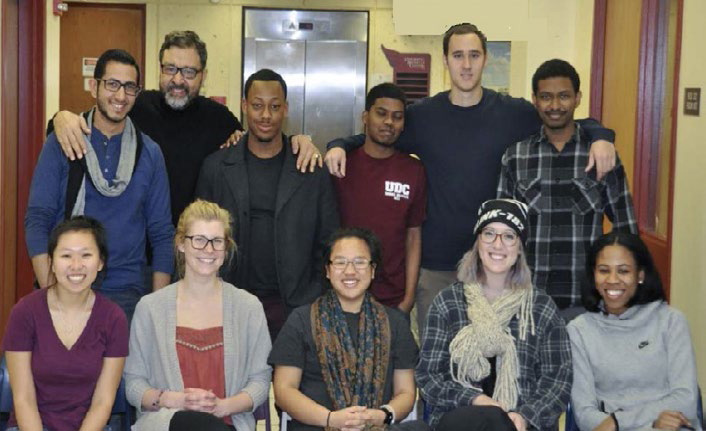
We hope our readers had an enjoyable and productive summer. For us September means the beginning of another exciting academic year. We truly enjoy being “Engineering Educators” since we are continuously working with young minds, inspiring, motivating and most importantly educating them to become our future engineers.
For this month’s ASCE-NCS newsletter article, I’ve decided to share some amazing success stories of my students both at UDC and GMU. As you may already know, nothing gives us educators more joy than talking about our students’ success stories. For this article I’ve picked six amazing students among five hundred.
Victoria Church, unquestionably Dr.Z’s best student at UDC. She transferred from UVA, is the heroine of UDC’s Steel Bridge victory, and is the driver of UDC’s MARS ROVER of NASA’s Human Exploration Rover Competition. Victoria wrote “Dr.Z. thank you so, so much for supporting my Structural Engineering education and for being a HUGE ADVOCATE for me. You helped instill confidence in myself that I will take with me to my new job at Jacobs.” According to rumors, Victoria’s starting salary made some young colleagues envious! Good luck Victoria! You’ll be a great engineer; don’t forget your alma mater and keep making us proud. Also, it is not too early to start working for your PE exam. Let us know if you need any help.
Mutlu Gunduz, one of my BEST students at GMU who took my CEIE-400 class there wrote, “ I have a great news for you Dr. Z. Yes, I have CONQUERED my FE exam on my first try. I cannot tell you how happy I am. First I was a little nervous but having Dr. Z in my corner made all the difference. In the exam, on several questions, your well known “Guerrilla Methods” made all the difference and I easily solved them in no time. Even though a thousand words of gratitude would not be enough, I still want to say again, THANK YOU VERY MUCH Dr. Z. for your time, effort, and mentorship. By the way let me know when you are free. Because Starbucks coffee will be on me this time, as I promised.” We wish Mutlu good luck! We’ve already told him to start preparing for his PE exam immediately. Mutlu has our phone number; our commitment to our students is not for a semester, but for life.
Sandae Tait, one of our star students at UDC, took the FE exam while taking our FE Prep class (CVEN 418) at UDC and CONQUERED it on his first attempt. Yet, Sandae’s success story didn’t end there. He applied to COLUMBIA UNIVERSITY for his graduate studies in Civil Engineering and in May 2019 he received a full scholarship. We wish him good luck.
Samantha Babbitt, one of our best students in CEIE-400 classes at George Mason CONQUERED her FE exam on her FIRST try. Samantha sent us a note (including Mr. Simmons) and said “Your techniques and GORILLA formulas saved me lots of time in the exam. Also, your calculator shortcuts saved me a ton of time which we learned in your classes. Thank you.” I am glad our instruction and tools in CEIE-400 helped her to conquer her FE exam on her first try. We wish Samantha all the best.
Stacey Lockerman was UDC ASCE Student Chapter president and another star student from UDC. I met her first time back in 2013 as a Mechanical Engineering major in my Intro to Engineering freshman class. Immediately I knew that she was a very special student. At the end of that semester Stacey decided not only to switch to Civil Engineering but also decided to attend to our pro-bono Saturday classes for FE and PE exams at UDC. Back in 2013 she wrote “Dr. Z. Having just begun college this semester, I still have a long way to go, but for fun I already try to construct my own formulas based on different topics. When it comes to being creative, I am always trying to come up with new ideas by thinking of ways things can be done differently or looking at things from a different viewpoint.” In May 2019, Stacey graduated from UDC and received a full scholarship from COLUMBIA UNIVERSITY. We wish Stacey all the best. She will be a great Civil Engineer.
Mera Shabti was a STAR student in our CEIE-400 class at George Mason. On March 29 and 30, Mason’s Student Chapter of the American Society of Civil Engineers (ASCE) and the Sid and Reva Department of Civil, Environmental and Infrastructure Engineering (CEIE) at GMU hosted the annual ASCE Virginia’s Conference and various competitions were organized. Amazingly, Mera was the 1st PLACE WINNER at Marr Technical Paper Competition, Hardy Cross Competition, and Geotechnical Challenge GMU Team. Department Chair Prof. Sam Salem and ASCE faculty advisors Profs. Liza Durant and Doaa Bondok provided guidance and support throughout the competition. We wish Mera all the best. She will definitely be a great Civil Engineer.
Until next time,
Ahmet Zeytinci (Dr.Z.)
Dr. Z’s Corner (201910) - Teaching Engineering Ethics to Our Engineering Students: The Story of a National Contest
Engineering has a direct and vital impact on the quality of life for all people. Accordingly, the services provided by engineers require honesty, impartiality, fairness, and equity, and must be dedicated to the protection of the public health, safety, and welfare. In this month’s Dr. Z’s Corner article, we’ll discuss a real-world case study in ethics and how we use this opportunity as a tool to teach engineering ethics to our engineering students. I still remember the joy of team UDC, with my late colleague and friend Philip Brach (Phil), winning another prestigious national competition. The contest was about ethics, sponsored by the National Society of Professional Engineers (NSPE) and titled “2007 Milton F. Lunch Ethics Contest.”
A civilized society requires acceptable habits and customs if it is to survive anarchy. Historically the prohibitions of unacceptable practices were through the sanction of either law or religion. Less serious offenses were usually dealt with by socially ostracizing the offender. Today our customs are divided into moral or ethical issues. Dan H. Pletta defined morals as the principles or the standards of right or wrong conduct involving voluntary action, and ethics, as the study of human actions regarding right or wrong.
An engineer is a critical player in any modern technological society. His or her values, and how he or she participates in the global economy, is and will be a critical component of the well being of our society. As engineering educators, we have an important role to play in forming the “ethical values” of the engineers of the future and tempering them in the application of ethics regards to their practice of the engineering profession.
Here we’ll focus on that aspect of acceptable human behavior known as ethics: precisely, the ethical behavior expected of engineers in the practice of their profession.
Each year NSPE announces a question of ethics. Engineering students and engineers have the opportunity to answer the question and submit their arguments in support of their answers to the question. There is a $1000 prize to those that submit the best analysis and defense.
As an instructor, we first present the case to the students and explain the facts. Then, the students are assigned the task of determining which sections of code might be relevant to the ethical issue in question. Then collectively, a discussion among the students is held in class to arrive at a consensus of which canons will be used to determine the ethics of the case and to defend their answer to the question.
The following is the summary of a response that was submitted by our engineering students at UDC to the 2007 Milton F. Lunch Annual Ethics Contest. Our students made us proud again and won the 1st Prize.
Ethics Contest Question
A licensed engineer (Engineer A) advertised on his website that he would “seal” drawings for a fixed price. Is this action ethical or unethical?
Our senior class found this ad to be unethical as did the NSPE Committee.
The NSPE Code of Ethics indicates under professional obligations, “Engineers shall conform with state registration laws in the practice of engineering” (III.8a). The question here is, to which state is he going to conform, if his service is designed to meet with every local or state requirement. This is impossible to accomplish as regulations and laws differ from one state to another. Therefore, in this case, Engineer A’s website is an exaggeration of his ability to provide services in areas where he is not licensed.
Not only that, the website’s claim is unethical because Engineer A is charging a nominal fee for sealing any project and this is not right. Because it is impossible to know how much work is required to perform a thorough review of the required documents to assure that they conform to every applicable engineering standard. Engineer A also overlooks the potential for complicated designs in pursuit of attracting customers, which could lead to unsafe consequences. The Code of Ethics states “Engineers shall not promote their own interest at the expense of the dignity and integrity of the profession (III.1.e).
It is important to realize that right or wrong is an essential aspect of behavior, however in our class on ethics our primary goal was to expose the students to a process for arriving at an ethical decision. As with the adage, “Beauty is in the eye of the beholder,” so also is the issue of ethics, a function of culture and background.
As engineering educators, our goal should be to ensure that our students have experienced the process of critically examining their professional behavior in accordance with the established ethical norms.
Until next time,
Ahmet Zeytinci (Dr. Z.)
Dr. Z’s Corner (201911) - F.E. Stands for Fundamentals of Engineering: FE-Exam Day Experience
In this month’s article we would like to answer many of our readers’ questions regarding the Fundamentals of Engineering (F.E) exam and what you are expected to do that day.
The Fundamentals of Engineering (FE) exam is generally your first step in the process to becoming a professional licensed engineer (P.E.). It is designed for recent graduates and students who are close to finishing an undergraduate engineering degree from an EAC/ABET-accredited program. FE exam is a computer-based test (CBT) administered by the National Council of Examiners for Engineering and Surveying (NCEES).
When approaching the FE Exam for the first time, it’s natural to feel a bit overwhelmed. The best way to build your confidence is to prepare for the test and familiarize yourself with the FE Ref. Handbook 9.5, the only official reference material for the computer-based FE exams. Review the latest version of the handbook (currently v.9.5) prior to exam day. Most importantly, familiarize yourself with the charts, formulas, tables, and other reference information provided. An electronic version will be available onscreen during the actual exam. Printed copies will not be allowed in the exam room.
Once your registration is approved, you will receive an email notification that you have been authorized to take the exam and are eligible to schedule your exam appointment. NCEES computer-based tests (CBT) are offered in testing windows throughout the year during the following months: January, February, April, May, July, August, October and November.
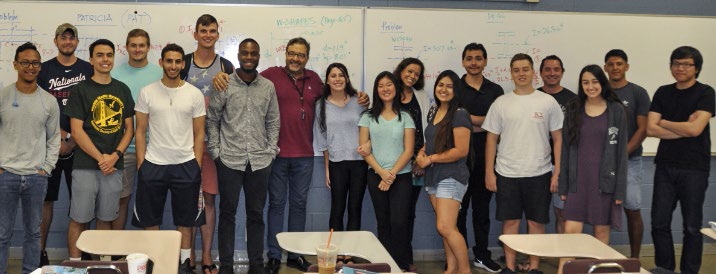
With Civil Engineering Students at George Mason University (CEIE-404)
Exam day experience
Once you register and know your exam date, NCEES recommends the following: First, you should plan to arrive at the testing center 30 minutes prior to your scheduled appointment. Upon arrival, a representative will provide you with a copy of NCEES-CBT exam rules for your review.
After doing so, you will be asked to provide your digital signature to confirm that you have read the rules and agreed to abide by them. Also, you will be asked to provide a current government issued form of ID such as a driver’s license. Once the representative has confirmed your identification and the exam that you are taking, you will be asked to provide a palm vein scan and have your photo taken. Your signature, palm vein scan, and photo will be stored with your exam result.
Prior to be admitted into the testing room, a representative will insure that you have only the items that NCEES allows in the testing room. These items include your ID, an NCEES approved calculator, and eye glasses. Most test centers have secure storage lockers on site for you to store prohibited items such as cell phones, other electronic devices, and personal belongings such as a watch, wallet, and bag.
Once you complete the check in process, then you report to an exam proctor who will ask you to confirm your ID by providing your palm vein scan again. Then the proctor will give you a reusable booklet and marker for scratch work. The proctor will then review the exam rules, escort you to the exam room and assigned work station, and launches the exam. Before starting your exam, all examinees will be required to read and agree to the NCEES’ non-disclosure agreement and complete a brief tutorial to learn how to ADVANCE to the next item, RETURN to a previous item, and FLAG items for review.
The FE exam includes 110-questions. The exam appointment time is 6 hours long. Nondisclosure agreement (2 minutes); Tutorial (8 minutes); Actual exam (5 hours and 20 minutes), and scheduled break (25 minutes).
After completing approximately 55 questions, examinees will be prompted on screen with the option to take a 25-minute break. Examinees who wish to take the scheduled break should raise their hands and wait for the prompter tor assistance. Unscheduled breaks may be requested at any time during the exam by following the same procedure. However, examinees should be aware that clock will not stop during an unscheduled break. Examinees are allowed to access their lockers during the scheduled and unscheduled breaks.
After completing the exam and a brief survey, you should raise your hands and the proctor will verify that you had properly exited from exam, escort you from testing room, and will collect your booklet and marker. You will receive an email from NCEES within 7 to 10 days notifying you that your results are available for viewing in your MYNCEES account.
Lastly, stay relaxed and confident. Always keep a good attitude and remind yourself that you are going to do your best!
Until next time,
Ahmet Zeytinci (Dr.Z.)
Dr. Z’s Corner (202001) - Greetings from Oslo
Dr. Z Visits Oslo Metropolitan University (OSLOMET) One of the Fastest-Growing Universities in Europe
This month’s article is written by Dr. Vagelis Plevris, Associate Professor and Head of the Research Group “Structural Engineering” at Oslo Metropolitan University (OsloMet) in Oslo, Norway. Oslo is one of the fastest-growing capital cities in Europe and so is OsloMet, Norway’s most urban and third-largest university, with more than 20,000 students and over 2,000 employees with research activities in areas that are important for welfare and value-creation, such as health, education, social sciences, technology, and design, committed to making a positive-impact in the Oslo region, in Norway and around the world.

Monday, November 4, 2019
Oslo, Norway
Dr. Ahmet Zeytinci (Dr. Z), my colleague and friend, arrived at my home in Oslo, Norway, as he prepared for his visit with the Department of Civil Engineering and Energy Technology of Oslo Metropolitan University (OsloMet). I would like to share with you all a brief glimpse into our adventures and experiences over the course of his week-long visit.
Tuesday, November 5, 2019
Oslo Metropolitan University
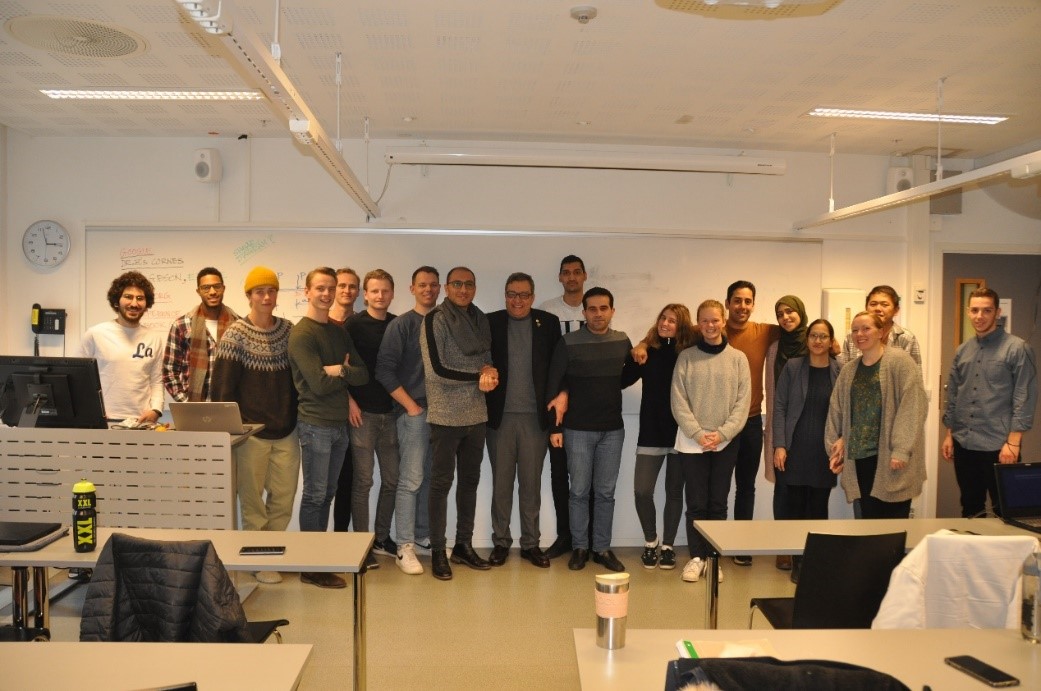
Dr. Z had the opportunity to teach students of the master’s degree Program in Structural Engineering and Building Technology. He was a guest lecturer in my class “Finite Element Method in Structural Analysis”. The students were very enthusiastic to be taught by Dr. Z, learn about his special techniques and “Gorilla” formulas and listen to his amazing success stories and his advice on how to advance in the profession!
Wednesday, November 6, 2019
Holmenkollen, Oslo, Norway
On Wednesday we visited Holmenkollen, a neighborhood of Oslo, with its famous ski jumping hill, the Holmenkollbakken. Holmenkollbakken is a large ski jumping hill with a capacity for 70,000 spectators. Holmenkollen has hosted the Holmenkollen Ski Festival since 1892. The hill has great engineering interest. It has been rebuilt 19 times. During the Second World War, the venue was used as a military installation, but upgraded in the late 1940s. Further expansions were made ahead of the 1966 and 1982 World Championships, as well as in 1991. Between 2008 and 2010, the entire structure was demolished and rebuilt. The tower construction material is steel while grandstands are made of steel and concrete. It is the only steel ski jump in the world today. A total of 1,000 tons of steel was used in the whole construction. The new design by JDS Architects won the Norwegian Steel Construction Prize and the ECCS (European Convention for Constructional Steelwork) Structural Steel Design Award in 2011.

Thursday, November 7, 2019
Oslo Metropolitan University
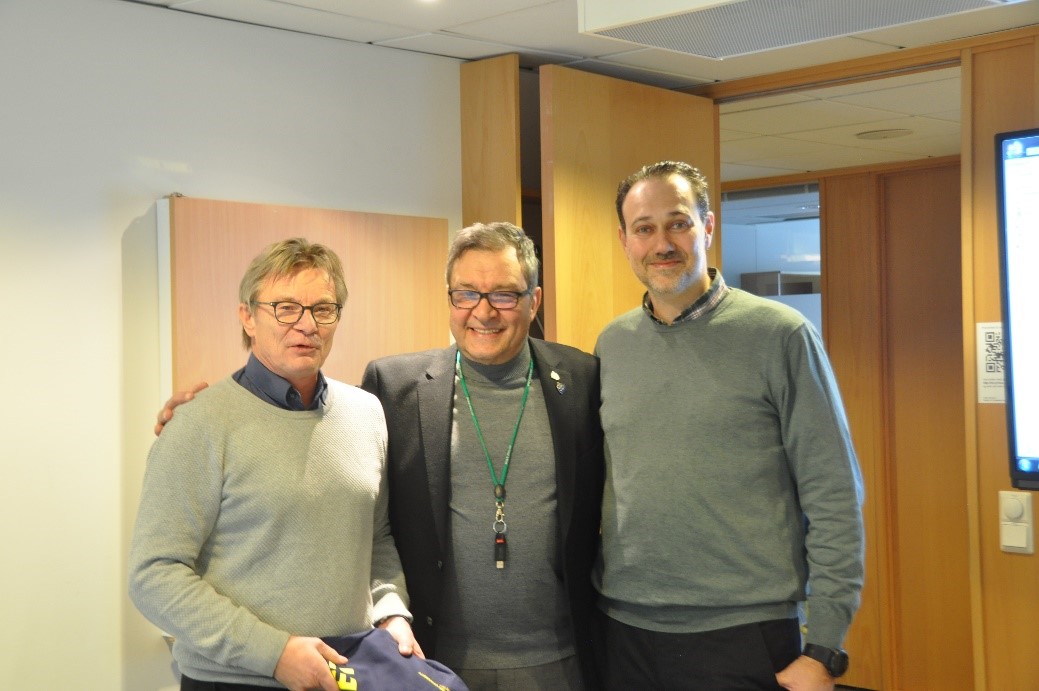
On Thursday, Dr. Z had meetings with the Head of the Department of Civil Engineering and Energy Technology of OsloMet, Dr. Hallgrim Hjelmbrekke, and myself, the Head of the Research Group “Structural Engineering”, where we had fruitful discussions on topics related to civil engineering education and excellence in professional engineering. Dr. Z gave a very interesting and inspiring presentation to staff members of OsloMet where he spoke about the Professional Engineering (P.E.) exam of NCEES in the US, Dr Z’s Corner, his university and others. Among other topics, we discussed the opportunity for OsloMet to organize local NCEES F.E./P.E. exams in Norway in the future.
Thursday, November 7, 2019
Oslo Metropolitan University P35 Building
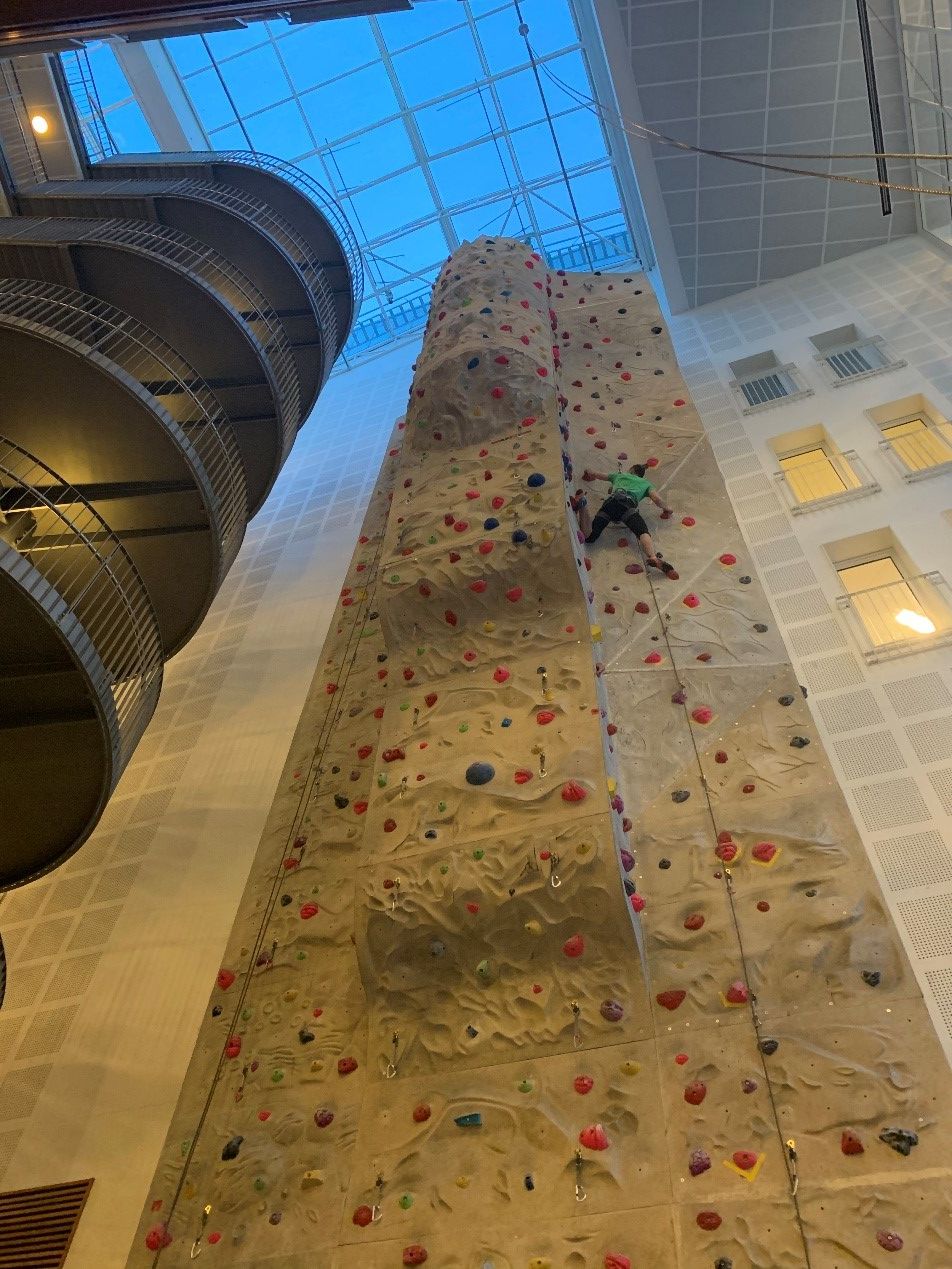
On the same day we visited the climbing wall in Building P35 of OsloMet. It is a permanently installed climbing wall that students and staff can try for free. Work-life balance is very highly valued in Norway and climbing is a very good relaxation from everyday life. The climbing wall is available to all students and staff associated with all faculties. With a height of 19.3 meters (63 ft), it is among Norway’s tallest indoors climbing facilities and it is divided into three sections consisting of climbing routes with difficulty levels from 4 to 7 according to the International Climbing and Mountaineering Federation (UIAA) grading system. The grades are from 1 to 10, with grade 1 being the simplest and grade 10 being the most difficult.
Friday, November 8, 2019
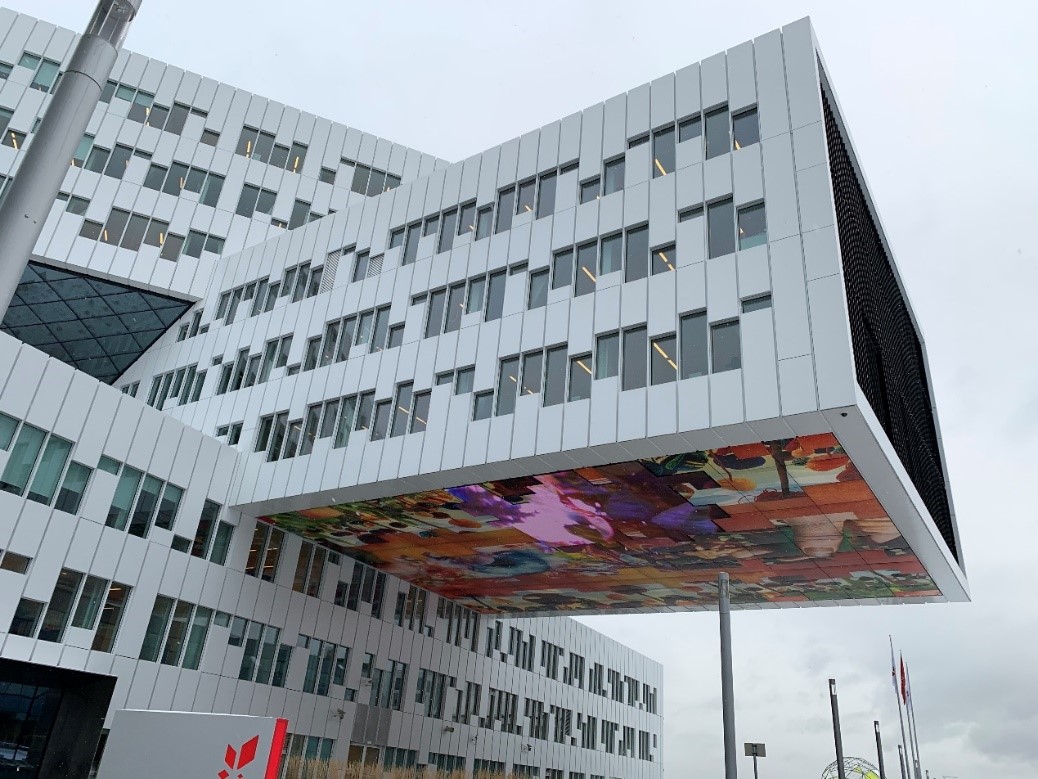
The Equinor building: An art of engineering. Fornebu, Oslo
Equinor (previously Statoil) is Norway’s largest oil and gas company. The architecture of their new office building in Fornebu, right outside Oslo, completed in 2012, is inspired by offshore steel constructions. The building is made out of five lamellae of equal size, each stacked on top of one other, with a total area of 117,000 sq. meters (1.26 million sq. feet). The concept minimizes the environmental footprint of the building and gives a generous amount of space to the park.
Each lamella is 3 stories high, 140 meters long and 23 meters (75 ft) wide. The modules are oriented differently to optimize internal daylight conditions and views towards the fjord landscape. Inside, the modules create a communal atrium, with an “urban plaza” connecting many of the social functions on the ground floor. The design is rooted in the democratic principle of bestowing all users of the building with excellent working conditions that include stunning views and good light conditions.
The steel superstructure enables the different modules to cantilever up to 30 meters (98 ft). The façade consists of about 1600 prefabricated elements with integrated windows, insulation and solar shading, a highly energy efficient solution with no visible fixings in the entire facade. Although an untraditional office building, the Equinor offices represent typical Scandinavian values by emphasizing democratic values and social equality.
Dr. Z’s Corner (202002) - Are You Ready for the New Computer Based Fundamentals of Engineering (FE) Exam?
Are You Ready for the New Computer Based Fundamentals of Engineering (FE) Exam? Finally, the National Council of Examiners for Engineering and Surveying (NCEES) made the important announcement regarding the new Fundamentals of Engineering Civil-Computer Based exam specifications. For our new readers, before discussing the new changes, we would like to start with a brief overview of the FE exam. The FE exam is a computer-based test (CBT). It is closed-book with an electronic reference (FE Ref. Handbook, v.9.5). Examinees have 6 hours to complete the exam, which contains 110 questions. The 6-hour time also includes a tutorial and an optional scheduled break. The FE exam uses both the International System of Units (SI) and the U.S. Customary System (USCS).
New Exam Specifications: Modified Knowledge Areas and Number of Questions
(Published by NCEES here)
I. Mathematics and Statistics (Number of Questions: 8–12)
A. Analytic geometry
B. Single-variable calculus
C. Vector operations
D. Statistics (e.g., distributions, mean, mode, standard deviation, confidence interval, regression and curve fitting)
II. Ethics and Professional Practice (4–6)
A. Codes of ethics (professional and technical societies)
B. Professional liability
C. Licensure
D. Contracts and contract law
III. Engineering Economics (5–8)
A. Time value of money (e.g., equivalence, present worth, equivalent annual worth, future worth, rate of return)
B. Cost (e.g., fixed, variable, direct and indirect labor, incremental, average, sunk)
C. Analyses (e.g., break-even, benefit-cost, life cycle, sustainability, renewable energy)
D. Uncertainty (e.g., expected value and risk)
IV. Statics (8–12)
A. Resultants of force systems
B. Equivalent force systems
C. Equilibrium of rigid bodies
D. Frames and trusses
E. Centroid of area
F. Area moments of inertia
G. Static friction
V. Dynamics (4–6)
A. Kinematics (e.g., particles, rigid bodies)
B. Mass moments of inertia
C. Force acceleration (e.g., particles, rigid bodies)
D. Work, energy, and power (e.g., particles, rigid bodies)
VI. Mechanics of Materials (7–11)
A. Shear and moment diagrams
B. Stresses and strains (e.g., diagrams, axial, torsion, bending, shear, thermal)
C. Deformations (e.g., axial, torsion, bending, thermal)
D. Combined stresses, principal stresses, and Mohr’s circle
VII. Materials (5–8)
A. Mix design of concrete and asphalt
B. Test methods and specifications of metals, concrete, aggregates, asphalt, and wood
C. Physical and mechanical properties of metals, concrete, aggregates, asphalt, and wood
VIII. Fluid Mechanics (6–9)
A. Flow measurement
B. Fluid properties
C. Fluid statics
D. Energy, impulse, and momentum of fluids
IX. Surveying (6–9)
A. Angles, distances, and trigonometry
B. Area computations
C. Earthwork and volume computations
D. Coordinate systems (e.g., state plane, latitude/longitude)
E. Leveling (e.g., differential, elevations, percent grades
X. Water Resources and Environmental Engineering (10–15)
A. Basic hydrology (e.g., infiltration, rainfall, runoff, watersheds)
B. Basic hydraulics (e.g., Manning equation, Bernoulli theorem, open-channel flow)
C. Pumps
D. Water distribution systems
E. Flood control (e.g., dams, routing, spillways)
F. Stormwater (e.g., detention, routing, quality)
G. Collection systems (e.g., wastewater, stormwater)
H. Groundwater (e.g., flow, wells, drawdown)
I. Water quality (e.g., ground and surface, basic water chemistry)
J. Testing and standards (e.g., water, wastewater, air, noise)
K. Water and wastewater treatment (e.g., biological processes, softening, drinking water treatment)
XI. Structural Engineering (10–15)
A. Analysis of statically determinant beams, columns, trusses, and frames
B. Deflection of statically determinant beams, trusses, and frames
C. Column analysis (e.g., buckling, boundary conditions)
D. Structural determinacy and stability analysis of beams, trusses, and frames
E. Elementary statically indeterminate structures. Loads, load combinations, and load paths (e.g., dead, live, lateral, influence lines and moving loads, tributary areas)
F. Design of steel components (e.g., codes and design philosophies, beams, columns, tension members, connections)
G. Design of reinforced concrete components (e.g., codes and design philosophies, beams, columns)
XII. Geotechnical Engineering (10–15)
A. Index properties and soil classifications
B. Phase relations
C. Laboratory and field tests
D. Effective stress
E. Stability of retaining structures (e.g., active/passive/at-rest pressure)
F. Shear strength
G. Bearing capacity
H. Foundation types (e.g., spread footings, deep foundations, wall footings, mats)
I. Consolidation and differential settlement
J. Slope stability (e.g., fills, embankments, cuts, dams)
K. Soil stabilization (e.g., chemical additives, geosynthetics)
XIII. Transportation Engineering (9–14)
A. Geometric design (e.g., streets, highways, intersections)
B. Pavement system design (e.g., thickness, subgrade, drainage, rehabilitation)
C. Traffic capacity and flow theory
D. Traffic control devices
E. Transportation planning (e.g., travel forecast modeling, safety, trip generation)
XIV. Construction Engineering (8–12)
A. Project administration (e.g., documents, management, procurement, project delivery methods)
B. Construction operations and methods (e.g., safety, equipment, productivity analysis, temporary erosion control)
C. Project controls (e.g., earned value, scheduling, allocation of resources, activity relationships)
D. Construction estimating
E. Interpretation of engineering drawings
Until next time,
Ahmet Zeytinci, (Dr. Z.)
- Dr. Z’s Corner (202003) - On Building Industry-Academia Collaborations
- Dr. Z’s Corner (202004) - Do You Know Who Your True Ally is During the Fundamentals of Engineering (FE) Exam?
- Dr. Z’s Corner (202005) - To optimize, or not to Optimize, that is the Question for the Construction Industry
- Dr. Z’s Corner (202009) - FE Exams During Covid-19: Most Frequently Asked Questions and Exam Day Experience