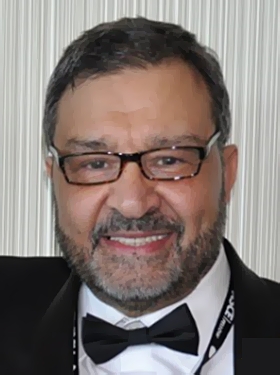
Dr. Z’s Corner (201803) - Discover Engineering Family Day & Advice to College Students
The National Building Museum in Washington, DC, held its annual Discover Engineering Family Day on Feb. 17, 2018. Discover Engineering Family Day is a fun-filled day designed to introduce students 4 to 12 to the wonder of engineering. It attracts thousands of people and kicks off Engineers Week activities as well.
Engineers Week is a time for everyone to celebrate and wonder what the next big innovation will be. It’s also a wonderful opportunity for volunteers and educators to inspire students by engaging them in hands-on engineering outreach, showing them that their school subjects can help solve real problems, and, of course, encouraging them to wonder “is engineering my future?” It is always fun to be part of these activities and this year I enjoyed not only talking to many parents and young future engineers but also some of the readers of ASCE-NCS monthly newsletters.
And surprisingly we met some of our former students. Especially two engineers from our Saturday classes were very happy since they’ve conquered their FE and PE exams, thanks to our pro bono classes and ASCE-NCS, Dr. Z’s Corner articles.
We met some engineering students as well. Of course, as usual, they’ve asked for some tips for college students. I promised them I would include the advice of an MIT professor in this month’s column. As always, students and professionals alike are invited to visit Dr Z’s monthly practice problems here.
Dr. Edward Crawley is a professor of engineering and director of the Bernard M. Gordon Engineering Leadership Program at MIT. He gives the following advice to his students at MIT:
“Identify the people who inspire you and find out what makes them tick. If you love Apple products, Steve Jobs may be your idol. Then emulate his good traits in your personal, scholastic, and professional life.
“Develop a portfolio of your projects. Participate in every hands-on, experiential learning opportunity. This way, you’ll have something unique to show a prospective employer.
Learn the value of networking. When it comes to being a leader, whom you know is almost as important as what you know.
“In addition to E-mail, you can use LinkedIn or other social media tools to connect online. But remember: There’s no substitute for a traditional, face-to-face meeting, so if you can find a way to meet in person, that’s always the best.
“Work in teams as much as you can. Whether it’s creating a solar-powered car, participating in a sport, or writing for the school paper, get involved with an organization that requires a team effort to produce great results.
“Throughout your career, you can be sure you’ll work in teams, and the skills you develop in school will help prepare you to lead teams when you graduate.
“Seek informal leadership roles. You’re always a leader, whether you’re officially in charge of a team or not. Sounds counterintuitive, but you can lead from any position in an organization by influencing how people work together and how they make decisions.
“Find your flaws – and fix them. As with any skill, leadership needs constant improvement. When you are part of a team, try to create a way to get feedback from team members, group leaders, and professors.
“When you have concrete feedback on how people view you, you can work to improve your skills, including communication and leadership.
“Take a business class. As an engineer, it’s not enough for you to be technically proficient; you need to have business savvy. If you’re going to be a leader, you need to understand what a P&L is (also known as an income statement), read organization charts, know how to negotiate contracts, and be familiar with the myriad other functions that every top engineer needs to know.
A business course or two can take you a long way, and these classes are often easier to pass than your calculus course!
“Take design and other humanities classes. There’s a wide world out there beyond problem sets, laboratories, and theory.
“Tomorrow’s leaders will have to communicate effectively across international borders and be familiar with other cultures, so develop some proficiency in another language, travel abroad, or meet students from other cultures. Start “globalizing” right at college.
“Make your summers productive. Employers place tremendous value on practical experience. Seek out internship opportunities actively and early in your academic career. Try to demonstrate through your internships a series of evolving leadership experiences and use the internships to build your portfolio of actual projects/ products.
“Recruit and develop your personal board of directors. As an undergraduate, you might feel alone when confronted with hard decisions about the courses to take, jobs to apply for, or even balancing school work and your personal life. You won’t feel alone if you develop a personal board of directors just for you.”
Until next time,
Ahmet Zeytinci, P.E.
Dr. Z’s Corner (201804) - ASCE Steel Bridge Competition 2018
It’s always fun to have an event to look forward to, but it can be hard to stay patient when you have to wait for something you’re excited about. The more you focus on the event, the more you want it to happen right away.
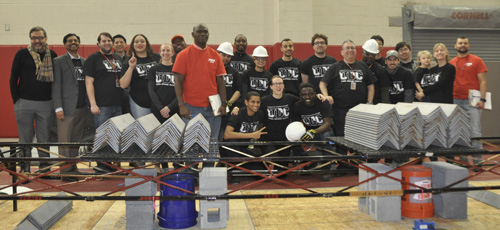
On March 23, 2018 the regional steel bridge competition for the Virginias, which includes the District of Columbia, was held at Catholic University in Washington, DC.
The AISC National Student Steel Bridge Competition is an annual competition where student groups from all over the globe design and construct a bridge within strict guidelines. Winners and first runners-up from most conferences are invited to compete at the national level. However, invitations are extended only to the winner from a conference with two, three or four participating universities, and to the top three teams from a conference with eleven or more participating universities. A university may enter more than one bridge in conference competition but only the best one may qualify for national competition.
At the national level, AISC assists with travel funds for teams from North American schools invited to compete. Each qualifying team from each conference from North American schools receives $500 from AISC.
I asked my young colleague Dr. Bryan Higgs from UDC, who is also the ASCE Faculty advisor and coach of TeamUDC, give us the full report about this exciting event and here is what Bryan sent wrote:
The AISC National Student Steel Bridge Competition begins at the regional level and only the best bridges from a region qualify for the national competition. Each bridge must be 17 feet long and be constructed from steel members that are a maximum of 3 feet long, 4 inches wide, and 6 inches deep.
Scoring: Scoring of the bridges is based on minimizing the total cost across four main categories: (1) timed build, (2) weight, (3) lateral load test, and (4) vertical load test.
Timing: The timed build consists of a build team carrying each member of the bridge, one by one, from a staging area across a transportation zone to the construction site. There, the members of the bridge are bolted together forming the bridge.
Major Challenge: The major difficulty is that there is a river in the middle of the construction zone which means that the bridge must be built from both sides of the river at the same time. The overall weight of the bridge is factored into the score as a cost per pound, so it is very beneficial to keep the bridge very light.
The lateral load test: The lateral load test places a 50-pound lateral load to the middle of the bridge and if the sway exceeds one inch, the bridge fails. The vertical load test is the most menacing where 2500 pounds of weight is loaded onto the bridge and if the deflection exceeds 3 inches, the bridge fails. Given all the scoring categories, a good bridge must be fast, light, and strong.
Competing Teams: The competition consisted of Virginia Tech, University of Virginia, Old Dominion University, West Virginia University, George Mason University, George Washington University, Virginia Military Institute, West Virginia Tech, Bluefield State College, Howard University, Catholic University, and Marshall.
The bridges produced by the students of each of these universities covered a wide array of different designs each with a unique identity. The fastest build time of the competition belonged to the first-place holder, Bluefield State College, at a mere 17 minutes and 34 seconds. UDC Firebirds weren’t far behind with a build time of 18 minutes and 3 seconds.
The vertical load test: The vertical load test was the most feared test as it eliminated most of the competing teams. UDC bridge stood strong and held all 2500 pounds with only a 0.97” deflection.
The UDC bridge received second place at the competition thus earning UDC the right to compete at the national level at the University of Illinois at Urbana-Champaign. Catholic University was the third and George Mason received the fourth place.
Here, it is important to remember these three key words: being fast, keeping it light, and making it strong.
We were proud to be representing the UDC Firebirds in this momentous occasion and are looking to not only survive the competition but thrive.
UDC’s bridge team feels the hopes and support of all UDC students, faculty, staff, and alumni behind them propelling them to greatness.
But we have to give credit to all the schools from the Washington, D.C. metro area for their participation and hard work and wish them good luck for future competitions!
Again, the National Competitions will be held at the University of Illinois, Urbana-Champagne on May 25th and 26th. Until then, challenge yourself with this month’s practice problems here.
Until next time,
Ahmet Zeytinci (Dr. Z.)
Dr. Z’s Corner (201805) - Approaching the FE Exam for the First Time
I owe my editor an apology. This month’s article was supposed to be at my Editor James Palmer’s desk a week ago. Thank you, Jim, for your patience and for the great work that you’ve done for the Newsletter. As you may know, Jim is also a Structural Engineer working in Washington, DC.
For educators like us May means the end of another academic year. To say that this past semester was “busy” would be an understatement. Lectures, quizzes, finals, research papers, proposals, consulting, MATHCOUNTS and ASCE Steel Bridge Competitions, pro-bono Saturday classes, . . . the list goes on.
According to NCEES, every year 55,000 people take the FE exam and most of them are college seniors within one year of graduating or are recent graduates. The FE exam is the first step in the process leading to the Professional Engineer (PE) license and it contains 110 multiple-choice questions. The exam appointment time is 6 hours long, which includes a nondisclosure agreement, tutorial (8 minutes), the exam (5 hours and 20 minutes), a scheduled break (25 minutes), and a brief survey.
When approaching the FE Exam for the first time, it’s natural to feel a bit overwhelmed. The best way to build your confidence is to prepare for the test and to know the ins and outs of the test. To answer many readers’ questions, we would like to review the exam day experience and what you are expected to do that day.
Once your registration is approved by NCEES, you will receive an email notification that you have been authorized to take the exam and are eligible to schedule your exam appointment. NCEES computer-based tests (CBT) are offered in testing windows throughout the year during the following months: January, February, April, May, July, August, October and November.
Once you register and know your exam date, NCEES recommends the following: First, you should plan to arrive at the testing center 30 minutes prior to your scheduled appointment. Upon arrival, a representative will provide you with a copy of NCEES-CBT exam rules for your review. After doing so, you will be asked to provide your digital signature to confirm that you have read the rules and agreed to abide by them.
Then you will be asked to provide a current government issued form of ID such as a driver’s license. Once the representative confirmed your identification and the exam that you are taking, you will be asked to provide palm vein scan and have your photo taken. Your signature, palm vein scan and photo will be stored with your exam result. Prior to be admitted into the testing room, a representative will insure that you have in your possession only the items that NCEES allows them to the testing room. These items include, your ID, an NCEES approved calculator and eye glasses.
Most test centers have secure storage lockers on site for you to store prohibited items such as cell phones, other electronic devices and personal belongings such as a watch, wallet and bag. Once you complete the check in process, then you report to an exam proctor who will ask you to confirm your ID by providing again your palm vein scan. Then the proctor will give you a reusable booklet and marker for scratch work. The proctor will review the exam rules and will escort you to the exam room and assigned work station and launch the exam. Before starting your exam, all examinees will be required to read and agree to the NCEES’ non-disclosure agreement and complete a brief tutorial to learn how to ADVANCE to the next item, RETURN to a previous item and FLAG items for review.
After completing approximately 55 questions, examinees will be prompted on screen with the option to take a 25-minute break. Examinees who wish to take the scheduled break should raise their hands and wait for the prompter tor assistance. Unscheduled breaks may be requested at any time during the exam by following the same procedure. However, examinees should be aware that clock will not stop during an unscheduled break. Examinees are allowed to access their lockers during the scheduled and unscheduled breaks.
After completing the exam and a brief survey, you should raise your hands and proctor will verify that you had properly exited from exam and escort you from testing room and collect your booklet and marker. You will not receive any type of score before leaving the testing center. You will receive an email from NCEES within 7 to 10 days notifying you that your results are available for viewing in your MYNCEES account.
Good Luck!
Ahmet Zeytinci (Dr. Z.)
Dr. Z’s Corner (201809) - Update on Dr. Z’s PRO-BONO FE/PE Review Classes for Students and Engineers from the Washington Metro Area
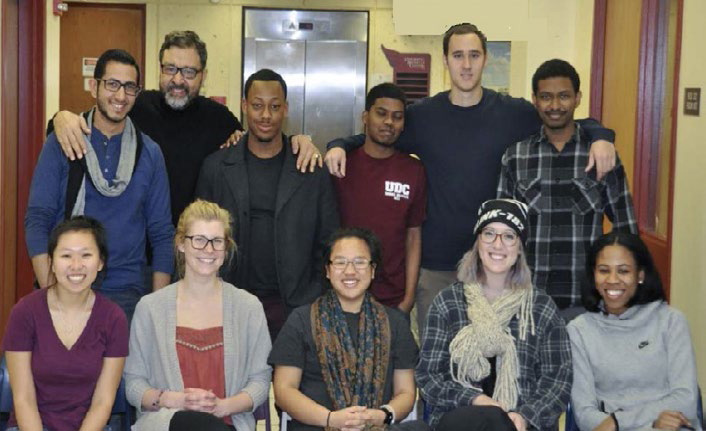
As readers of the NCS eNewsletter know, we are very fortunate to be associated with Dr. Ahmet Zeytinci (known to his UDC students and colleagues as “Dr. Z”) of the University of the District of Columbia. For two decades, Dr. Z has been holding free study sessions for the Fundamentals of Engineering (FE) and Professional Engineer (PE) exams, open to all students and young professionals in the NCS area. Dr. Z has also authored a monthly feature in the newsletter, Dr. Z’s Corner, since September 2014. (See http://www.asce-ncs.org/index.php/special-features/dr-z-s-corner). Because of his deep commitment to engineering education and tireless contributions via the newsletter, Dr. Z’s program has gained both national and international attention for helping young engineers develop the knowledge and confidence to pass the exams. Additionally, his track record of students passing the exams is impressive.
In the fall, Dr. Z plans to continue his pro-bono review sessions at a new venue: George Mason University (GMU) has agreed to provide facilities for Dr. Z to hold sessions for students from other institutions and practicing engineers in the NCS’ region who wish to conquer the FE and PE exams. The sessions will be held on Fridays from 5 to 7:30 p.m. in room 3507 of the Engineering Building, beginning August 31 and continuing through December 14, 2018 (every Friday except the day after Thanksgiving, November 23).
| Fall Semester (2018) | CEIE 404.003 | Fridays 10:30 am – 1:10 pm | ||
| CEIE 404.002 | Fridays 01:30 am – 4:10 pm | |||
| Spring Semester (2019) | CEIE 404.002 | Fridays 10:30 am – 1:10 pm | ||
| CEIE 404.001 | Fridays 01:30 am – 4:10 pm |
Dr. Z is passionate about engineering education and his dedication to help his students succeed is relentless. He makes sure every student understands the concepts, along with practical and efficient ways to solve typical exam problems. Former students report that he presents complex concepts in such a crystal clear and straight forward manner that they can’t believe it’s that easy. Further information can be obtained at:
In addition to the pro-bono review sessions, GMU has arranged for Dr. Z to teach two sections of a newly created class during the fall 2018 and spring 2019 semesters. The class, Senior Engineering Competency Exam, will be held as shown below. These sections will be limited to GMU engineering students and alumni.
Further information can be found at: http://civil.gmu.edu/people/ahmet-zeytinci.
Dr. Z’s Corner (201810) - Conquering the FE & PE Exams: Prove Yourself Without Saying a Word
We hope our readers had an enjoyable and relaxing summer. The month of September signals the end of summer, the beginning of autumn, and of course the start of a new school year if you are living in the Northern Hemisphere.
I had a very busy summer, working on several projects and as always, I was helping engineering students and practicing engineers, pro-bono, to conquer their FE and PE exams. I must admit, I also had a chance to visit my 95-year old mother living in Istanbul. It was a wonderful trip and my batteries are fully charged!
This month, I would like to answer two most frequently asked questions that we’ve been receiving from our readers in the United States and from overseas.
Who prepares, administers, and scores the FE and PE exams?
The National Council of Examiners for Engineering and Surveying (NCEES) develops, administers, and scores the FE and PE exams used for engineering and surveying licensure in the United States.
In a nutshell, what is FE exam?
The Fundamentals of Engineering (FE) exam is generally your first step in the process to becoming a professional licensed engineer (P.E.). According to NCEES, every year 55,000 people take the FE exam and most of them are college seniors within one year of graduating or are recent graduates. It is designed for recent graduates and students who are close to finishing an undergraduate engineering degree from an EAC/ABET-accredited program. The FE exam is a computerbased exam administered year-round at NCEES-approved Pearson VUE test centers.
The FE exam includes 110-questions. The exam appointment time is 6 hours long and includes a nondisclosure agreement (2 minutes), tutorial (8 minutes), actual exam (5 hours and 20 minutes), and a scheduled break (25 minutes).
The FE exam is offered in seven disciplines. Specifications for the exams are as follows: FE Chemical, FE Civil, FE Electrical and Computer, FE Environmental, FE Industrial and Systems, FE Mechanical, FE Other Disciplines. The NCEES FE Reference Handbook, version 9.5 is the only reference material that can be used during the exam. You will be provided with an electronic reference handbook during the exam. For access prior to your exam, you may either purchase a hard copy or download a free electronic copy.
In a nutshell, what is PE exam?
The Principles and Practice of Engineering (PE) exam tests for a minimum level of competency in a particular engineering discipline. It is designed for engineers who have gained a minimum of four years’ post-college work experience in their chosen engineering discipline. The PE exam is offered in the following seventeen disciplines:
Agricultural and Biological Engineering, Architectural Engineering, Chemical Engineering, Civil Engineering, Control Systems, Electrical and Computer, Environmental Engineering, Fire Protection (New), Industrial and Systems, Mechanical Engineering, Metallurgical and Materials, Mining and Mineral Processing, Naval Architecture and Marine, Nuclear Engineering, Petroleum Engineering, Software Engineering, and Structural Engineering.
PE Civil Exam Specifications
The PE Civil exam is an 8-hour exam with 80 questions. It is administered in pencil-and-paper format twice per year in April and October. It is important to familiarize yourself with your state licensing board’s unique registration procedures before registering for a PE exam. Special accommodations are available for examinees who meet certain eligibility criteria and sufficiently document their request.
The PE Civil exam is a breadth and depth examination. This means that examinees work the breadth section in the morning and one of the five depth modules in the afternoon. The breadth section contains questions from all five areas of civil engineering. The depth section focuses more closely on a single area of practice.
The details on the format, length of the exam, the topics covered, and applicable design standards, depend on the disciplines as listed belo
Construction (with design standards for the 2018 exam), Geotechnical (with design standards for the 2018 exam), Structural (with design standards for the 2018 exam), Transportation (with design standards for the October 2018 exam), Water Resources and Environmental.
It is important to remember that when registering for the PE Civil exam, you will also be asked to select an afternoon module. Your answer sheet will be scored based on the module that you selected during registration.
PE exam specifications and design standards are posted 6 months before the exam administration. Updates for the April exams are posted in November, and updates for the October exams are posted in May.
I would like to close with an exciting news. Starting this month, Prof. Howard Gibbs, P.E., F-NSPE will be contributing to Dr. Z’s Corner on “Ethics.” His career highlights are included at the end of the problems section.
Until next time,
Ahmet Zeytinci (Dr.Z.)
- Dr. Z’s Corner (201811) - Future of FE and PE Exams: CBTs, AITs or Simply Alternative Item Type Questions
- Dr. Z’s Corner (201902) - FE Exam-Day Experience: From Testing Environment to Exit Procedures
- Dr. Z’s Corner (201903) - More Rigorous Structural Design Procedures Create Debate Structural Engineering (SE) vs. Professional Engineering (PE)
- Dr. Z’s Corner (201904) - Importance of Setting Goals for Engineering Students