

Dr. Z’s Corner (201502) - Conquering the FE & PE Exams
By Ahmet Zeytinci, P.E., F-NSPE
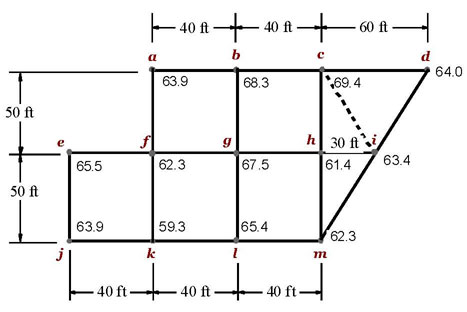

To answer some of our readers’ questions, I would like to review the requirements for licensing again and the new Professional Engineering (PE) Exam Specifications for Civil Engineers that will be effective beginning with the April 2015 examinations.
The graduates of a four-year college or a university program with a bachelor of science in engineering, bachelor of engineering, master of science in engineering or master of engineering from an Accreditation Board for Engineering and Technology, Inc., (ABET) accredited institution are eligible to take the new computer based Fundamentals of Engineering (FE) examination. This exam is developed and administered by the National Council of Examiners for Engineering and Surveying (NCEES). To register for the FE exam, the engineering licensing board in the state in which licensure is desired must be contacted. Applicants need to apply to the state licensing board to determine if they meet the requirements to take the FE exam. These requirements vary by state.
The FE exam tests applicants on breadth of understanding of basic engineering principles. Passing the FE exam typically qualifies the candidates for certification as an engineer in training (EIT) or engineering intern (EI). After gaining some engineering experience, generally four years, also varies from state to state, applicants have to take and pass a written Principles and Practice in Engineering, PE examination. The PE exam tests the applicant’s knowledge and skills in their chosen civil engineering discipline (i.e., construction, geotechnical, structural, transportation, and water resources and environmental). The PE exam uses both the International System of Units (SI) and the US Customary System (USCS).
The degree requirements for licensure are evolving. For example, effective Jan. 1, 2020, the NCEES will require additional credits beyond a bachelor of science in engineering degree. Effective and beginning with the April 2015 examinations, the new PE exam for the Civil Engineering will have new specifications. The new PE exam will be an eight-hour open-book exam with two sections, breadth and depth sections. Each section is four hours long and consists of 40 multiple choice questions. Examinees are required to work on all the questions in the morning session and in the afternoon module they have chosen. The final score is a combination of both section results (the depth results and the breadth results).
PE Exam – Morning Session Breakdown
The morning breadth section is 40 multiple-choice questions from the five discipline areas in civil engineering.
- Project Planning: 4 questions,
- Means and Methods: 3 questions,
- Soils Mechanics: 6 questions,
- Structures: 6 questions,
- Hydraulics and Hydrology: 7 questions,
- Geometrics: 3 questions,
- Materials: 6 questions, and
- Site Development: 5 questions.
PE Exam – Afternoon Session Breakdown
The afternoon depth section is 40 multiple choice questions and focus on a single area of practice in civil engineering (e.g., only construction or only geotechnical). Each discipline will be covered separately in the future articles.
Remember, in both FE and PE exams timing is everything. To conquer these exams speed is very important and speed can only be attained through practice and more practice!
Until next time, Dr. Z/
Dr. Z’s Corner (201503) - Construction Module Afternoon Depth Exam Specifications
By Ahmet Zeytinci, P.E., F-NSPE
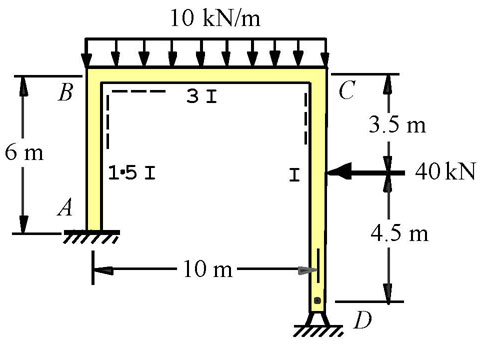
As promised in our February 2015 article, we are going to continue talking about the afternoon session of the PE civil exams. The afternoon session tests an engineer’s ability to practice competency in one of the five sub-disciplines of civil engineering (construction, geotechnical, structural, transportation, and water resources and environmental). NCEES designed the PE exam for engineers with FE (EIT) certificates who have at least four years post-college work experience in their chosen engineering discipline. The exams are offered twice a year, in April and October. Remember, new exam specifications begin with the April 2015 PE exams.
The PE civil exam lasts 8 hours and is split into a morning and an afternoon session (4 hours each). The morning breath session of the exam was detailed in the February issue of our column. The afternoon depth section is composed of 40 multiple choice questions and focuses on a single area of practice in civil engineering (e.g., only construction or only geotechnical). Depth exam results are combined with breadth results for final score. As in the morning session, the afternoon depth section uses SI units and the US Customary System (USCS). When you take the PE civil exam, you select an afternoon module during registration and your answer sheet is scored based on the module you selected when registering.
According to the latest statistics, the scores vary among the five civil engineering disciplines. Based on October 2014 test results, for first time test takers, structural scored the highest with 73%; followed by water resources and environmental 72%; geotechnical 67%; transportation 64%; and construction 56%.
Answering our readers’ questions, we will start with the new construction depth exam specifications and continue covering each sub-discipline area of civil engineering separately in future articles.
PE Civil Construction – Afternoon Depth Exam Specifications
The afternoon session of the PE civil construction exam has questions that will require a variety of approaches and methodologies, including design, analysis, and application. Some problems in the afternoon session may require knowledge of engineering economics. A typical breakdown with approximate number of questions:
- Earthwork Construction and Layout: 6 questions,
- Estimating Quantities and Costs: 6 questions,
- Construction Operations and Methods: 6 questions,
- Scheduling: 5 questions,
- Material Quality Control and Production: 6 questions,
- Temporary Structures: 7 questions,
- Health and Safety: 3 questions.
Also be aware that the new exams use the following Construction Design Standards (beginning with the April 2015 exams):
- ASCE 37 (Design Loads on Structures during Construction, 2002);
- NDS (National Design Specification for Wood Construction, 2012);
- CMWB (Standard Practice for Masonry Walls under Construction, 2012),
- AISC (Steel Construction Manual, 14th Edition, 2011);
- ACI 318-11 (Building Code Requirements for Structural Concrete, 2011);
- ACI 347 (Guide to Formwork for Concrete, 2004);
- ACI SP-4 (Formwork for Concrete, 2005);
- OSHA (Occupational Safety and Health Standards for the Construction Industry, 29 CFR Part 1926, US Federal Version); and
- MUTCD-Pt 6 (Manual on Uniform Traffic Control Devices – Part 6 Temporary Traffic Control, 2009).
One last reminder for exam applicants: When you pack your books and other reference material for the PE civil construction exam, do not forget the “Reference Categories” for the construction depth module. These include Construction Surveying, Construction Estimating, Construction Planning and Scheduling, and Construction Equipment and Methods.
Finally, during the exam do not rush and do not just dive in! Read each question very carefully all the way through to the end. In some cases, information provided at the end of the problem will clearly change your final answer. This month’s problem set can be found HERE.
Good Luck,
– Dr. Z.
Dr. Z’s Corner (201504) - A New Era for the PE Exams: Are You Ready for the New Specifications?
By Ahmet Zeytinci, P.E., F-NSPE
Civil Breath and Geotechnical Depth Exams
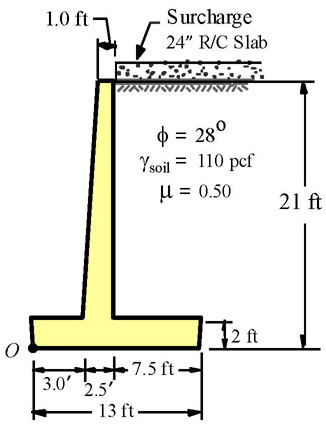
April 2015 is an important month for all engineers who are planning to take their PE exams. Why? Because effective April 2015, the new PE exam specifications will be implemented. Last month we discussed in detail the new specifications for the “Construction Module” and this month we are going to talk about the “Geotechnical Module”, afternoon depth exams.
PE civil exam basics:
- Offered twice a year; in April and October;
- Designed for engineers with FE (EIT) certificates who have gained at least four years’ post-college work experience in their chosen engineering discipline;
- Multiple-choice questions, lasting 8 hours;
- Split into a morning and an afternoon session (4 hours each; 40 multiple choice questions each);
- Both sessions use SI units and the US Customary System; and
- Morning and afternoon session exam results are combined for final the score.
- The February issue of our column details the morning breath session of the exam.
- The afternoon depth section focuses on a single area of practice in civil engineering to test an engineer’s ability to practice competently in one of the five sub-disciplines of the civil engineering.
- The exam is scored based on the afternoon module selected during registration.
PE Civil Geotechnical – Afternoon Depth Exam Specifications
The afternoon session of the PE Civil Geotechnical has questions that require a variety of approaches and methodologies, including design, analysis, and application. Some problems in the afternoon session may require knowledge of engineering economics. A typical breakdown with approximate number of questions:
- Site Characterization: 5 questions,
- Soil Mechanics, Laboratory Testing, and Analysis: 5 questions,
- Field Materials Testing, Methods, and Safety: 3 questions,
- Earthquake Engineering and Dynamic Loads: 2 questions,
- Earth Structures: 4 questions,
- Groundwater and Seepage: 3 questions,
- Problematic Soil and Rock Conditions: 3 questions,
- Earth Retaining Structures (ASD or LRFD): 5 questions,
- Shallow Foundations (ASD or LRFD): 5 questions,
- Deep Foundations (ASD or LRFD): 5 questions
The PE exam is an open-book exam. According to NCEES, you can bring bound reference material, loose paper bound with ring binders, plastic snap binders, and spiral-bound notebooks to the exam. All paper must remain bound during the exam, and sticky notes and flags must remain attached to book pages.
Finally, these are very fast-paced exams and you will have little time to look up information. Therefore, make sure you are familiar with your reference material and begin with the subject areas you know best. This will give you more time and build your confidence. Remember, it is always good idea to consider reverse engineering the problems by substituting the answers and seeing which one works. To help prepare for the exam, here is this month’s problem set.
Most importantly, stay relaxed and confident. Always keep a good attitude and remind yourself that you are going to do your best.
Until Next Time,
Ahmet Zeytinci, PE– Dr. Z.
NCS congratulates Dr. Z on his Community Service Award!
Dr. Z’s Corner (201506) - A New Era for the PE Exams: Are You Ready for the New Specifications?
Part 3 – Civil Breath and Water Resources and Environmental Depth Exams
By Ahmet Zeytinci, P.E., F-NSPE
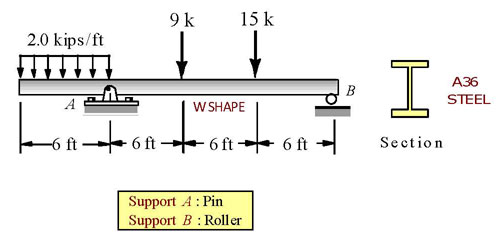
As we discussed in last month’s article, April 2015 is an important month for all engineers who are planning to take their PE exams. Because effective April 2015, the new PE exam specifications were implemented. In the March and April issues, we discussed in detail the new specifications for the “Construction Module” and “Geotechnical Module.” This month we discuss the “Water Resources and Environmental Module” afternoon depth exams.
PE Civil exam basics:
- Offered twice a year; in April and October.
- Designed for engineers with FE (EIT) certificates who have at least four years of post-college work experience in their chosen engi-neering discipline.
- Lasts 8 hours and consists of multiple choice questions. Every problem on the PE exam is standalone (there is only one question per problem).
- Split into a morning and an afternoon session (4 hours each; 40 multiple choice questions each).
- Both sessions use SI units and the US Customary System (USCS).
- Morning and afternoon session exam results are combined with breath results for final score.
- The February issue of our column details the morning breath session of the exam.
- The afternoon depth section focuses on a single area of practice in civil engineering to test an engineer’s ability to practice competently in one of the five sub-disciplines of the civil engineering.
- The exam is scored based on the afternoon module selected during registration.
PE Civil Water Resources and Environmental – Afternoon Depth Exam Specifications
The afternoon session of the PE Civil Water Resources and Environmental depth session includes questions that require a variety of approaches and methodologies, including design, analysis, and application. Some problems in the afternoon session may require knowledge of engineering economics.
A typical breakdown with approximate number of questions:
- Analysis and Design: 4 questions,
- Hydraulics–Closed Conduit: 5 questions,
- Hydraulics–Open Channel: 5 questions,
- Hydrology: 7 questions,
- Groundwater and Wells: 3 questions,
- Wastewater Collection and Treatment: 6 questions,
- Water Quality: 3 questions,
- Drinking Water Distribution and Treatment: 6 questions,
- Engineering Economics Analysis: 1 question.
The exam is open-book. According to NCEES, you can bring bound reference material, loose paper bound with ring binders, plastic snap binders, and spiral-bound notebooks. All paper must remain bound during the exam, and sticky notes and flags must remain attached to book pages. Do not bring any kind of graph paper with you into the exam. You can write only on the exam materials from NCEES.
According to former students who recently took the PE exam, make sure you review how to use the Darcy-Weisbach, Hazen-Williams equations, and the Moody Diagram. Don’t be surprised when you see some structural, geotechnical and transportation problems as well.
As we always remind our readers, these are very fast-paced exams and you will have little time to look up information. Therefore, make sure you are familiar with your reference material and begin with the subject areas you know best. This will give you more time and build your confidence. To help prepare for the exam, here is this month’s problem set.
Remember, it is always good idea to consider reverse engineering the problems by substituting the answers and seeing which one works. It is also important to remember that every problem on the PE exam is standalone. There are no problem statements with many related questions.
And finally, stay relaxed and confident. Always keep a good attitude and remind yourself that you are going to do your best!
Until next time,
Ahmet Zeytinci, P.E., (Dr. Z.)
NCS Congratulates Dr. Zeytinci on his 2015 National Society of Professional Engineers/Professional Engineers in Higher Education/Sustaining University Program Engineering Education Excellence Award!
Dr. Z’s Corner (201509) - A New Era for the PE Exams: Are You Ready for the New Specifications?
Part 4 – Civil Breadth and Transportation Depth Exams
By Ahmet Zeytinci, P.E., F-NSPE
As discussed in our three previous articles, the new PE exam specifications were implemented, effective April 2015. In the March, April, and June issues, we discussed in detail the new specifications for the “Construction Module,” “Geotechnical Module,” and “Water Resources & Environmental Module.” This month we will discuss the “Transportation Module” afternoon depth exams.
PE Civil exam basics:
- Offered twice a year; in April and October.
- Designed for engineers with FE (EIT) certificates who have at least 4 years of post-college work experience in their chosen engineering discipline.
- Lasts 8 hours and consists of multiple choice questions. Every problem on the PE exam is standalone (there is only one question per problem).
- Split into a morning and an afternoon session (4 hours each; 40 multiple choice questions each).
- Both sessions use SI units and the US Customary System (USCS).
- Morning and afternoon session exam results are combined with breadth results for final score.
- The February issue of our column details the morning breadth session of the exam.
- The afternoon depth section focuses on a single area of practice in civil engineering to test an engineer’s ability to practice competently in one of the five sub-disciplines of the civil engineering.
- The exam is scored based on the afternoon module selected during registration.
PE Civil Transportation – Afternoon Depth Exam Specifications
The afternoon session of the PE Civil Transportation depth session includes questions that require a variety of approaches and methodolo-gies, including design, analysis, and application. Some problems in the afternoon session may require knowledge of engineering economics.
A typical breakdown with approximate number of questions:
- Traffic Engineering (Capacity Analysis and Transportation Planning): 11 questions,
- Horizontal Design: 4 questions,
- Vertical Design: 4 questions,
- Intersection Geometry: 4 questions,
- Roadside and Cross-Section Design: 4 questions,
- Signal Design: 3 questions,
- Traffic Control Design: 3 questions,
- Geotechnical and Pavement: 4 questions,
- Drainage: 2 questions,
- Alternatives Analysis: 1 question.
Design Standards: Effective beginning with the October 2015 examinations, new revisions on design standards posted by NCEES on July 23, 2015, will be implemented.
Abbreviation & Design Standard Title:
AASHTO, A Policy on Geometric Design of Highways and Streets, 6th edition, 2011 (including November 2013 errata), American Association of State Highway & Transportation Officials, Washington, DC.
AASHTO, Guide for Design of Pavement Structures (GDPS-4-M), 1993, and 1998 supplement, American Association of State Highway & Transportation Officials, Washington, DC.
AASHTO, Roadside Design Guide, 4th edition, 2011 (including February 2012 and July 2015 errata), American Association of State Highway & Transportation Officials, Washington, DC.
AASHTO, Mechanistic-Empirical Pavement Design Guide: A Manual of Practice, interim edition, July 2008, American Association of State Highway & Transportation Officials, Washington, DC.
AASHTO, Guide for the Planning, Design, and Operation of Pedestrian Facilities, 1st edition, 2004, American Association of State Highway & Transportation Officials, Washington, DC.
AASHTO, Highway Safety Manual, 1st ed., 2010, vols. 1–3 (including February 2012 errata), American Association of State Highway & Transportation Officials, Washington, DC.
AI, The Asphalt Handbook (MS-4), 7th edition, 2007, Asphalt Institute, Lexington, KY.
HCM, Highway Capacity Manual 2010, vols. 1–3, Transportation Research Board – National Research Council, Washington, DC. This includes the following:
- Approved HCM 2010 Corrections and Clarifications (as of January 2014)
- Approved HCM 2010 Interpretations (as of January 2014)
- Replacement HCM 2010 Volume 1–3 pages (April 2014)
- Replacement HCM 2010 Volume 1–3 pages (January 12–February 13)
- Replacement HCM 2010 Volume 1–3 pages (March 2013)
MUTCD, Manual on Uniform Traffic Control Devices, 2009, including Revisions 1 and 2 dated May 2012, U.S. Department of Transportation – Federal Highway Administration, Washington, DC. 6
PCA, Design and Control of Concrete Mixtures, 15th edition, 2011, Portland Cement Association, Skokie, IL.
FHWA, Hydraulic Design of Highway Culverts, Hydraulic Design Series Number 5, Publication No. FHWA-HIF-12-026, 3rd edition, April 2012, U.S. Department of Transportation – Federal Highway Administration, Washington, DC.
Final Notes: The exam is open-book. According to NCEES, you can bring bound reference material, loose paper bound with ring binders, plastic snap binders, and spiral-bound notebooks. All paper must remain bound during the exam, and sticky notes and flags must remain attached to book pages.
As we always remind our readers, these are very fast-paced exams and you will have little time to look up information. Therefore, make sure you are familiar with your reference material and begin with the subject areas you know best. This will give you more time and build your confidence. Also, it is always good idea to consider reverse engineering the problems by substituting the answers and seeing which one works. To help prepare for the exam, here is this month’s problem set.
And finally, stay relaxed and confident. Always keep a good attitude and remind yourself that you are going to do your best!
Until next time,
Ahmet Zeytinci, P.E., (Dr. Z.)
- Dr. Z’s Corner (201510) - A New Era for the PE Exams: Are You Ready for the New Specifications?
- Dr. Z’s Corner (201511) - Three Es & Statistics: Journey to Become a P.E.
- Dr. Z’s Corner (201601) - ASCE-2016 Centennial Celebration: Dr. Z’s Corner & Exciting New Features
- Dr. Z’s Corner (201602) - A Picture is Worth a Thousand Words: Demystifying the Shear Force and Bending Moment Diagrams